
Home Blog Page 13

Clairvoyance: It’s Intuitive Ability and Ascension

Man with tied-back silver hair and glasses seated on a teal bench in an archive room

Clairvoyance and ascension are sometimes linked in spiritual writing: the idea is that personal growth brings expanded awareness or unusual perceptions. You can explore that idea as a belief without treating it as a promised biological change or a verified passage into another dimension.

You do not need visions, aura colors or messages to prove that your spiritual life is meaningful. An interest in growth can be expressed through ordinary choices: listening more carefully, respecting a boundary, acknowledging a mistake or making room for uncertainty.

Quick Guide

Keep spiritual meaning, personal experience and factual claims on separate lines. A vivid impression does not establish its cause. Choose optional reflection over pressure to produce visions, and do not interpret distress or sleep loss as proof that you must continue a practice.

What does ascension mean here?

This article uses “ascension” as a personal spiritual idea of growth or expanded awareness. It does not use the word as a clinical stage, a measurable frequency or a universal teaching shared by all religions. A person may find the language inspiring; another may prefer “reflection,” “maturity” or no spiritual label at all.

The Pluralism Project describes New Age as a varied set of religious movements, not one uniform doctrine. That is a useful reason to ask whose interpretation you are reading. A modern teacher’s account of dimensions, chakras or awakening should not be presented as the single meaning of an entire religious tradition.

Beliefs can also cross affiliation boundaries. Pew Research Center’s 2018 reporting found selected New Age beliefs among both religiously affiliated and unaffiliated Americans. That historical survey describes belief, not evidence that the beliefs are physically true, and it does not establish a shared ascension doctrine.

Clairvoyance is a claim, not a graduation requirement

In spiritual settings, clairvoyance is often described as clear-seeing through images or impressions. Someone might report a scene in the mind’s eye, a symbol or a feeling that an image has meaning. The report and its interpretation are different: an image does not by itself show that information came from a spirit or an unseen place.

For an introduction to the terminology, see psychics and clairvoyant psychics. These labels should help explain what someone claims to experience, not rank their moral worth or make a promise of accuracy.

There is no need to turn spiritual growth into a competition over who sees more. Someone who reports no unusual experiences is not therefore less compassionate, less thoughtful or behind on a required path.

Separate three kinds of statement

  • Experience: “I pictured a bright doorway while reflecting.” This describes what a person reports noticing.
  • Meaning: “I chose to use that image as a reminder to try something new.” This is a personal interpretation.
  • Factual claim: “The doorway proves I entered another universe.” This adds an explanation that the image alone does not verify.

The same distinction applies to auras and impressions involving someone who has died. You may value an experience without knowing its cause. You are not required to accept another person’s explanation or pay for confirmation.

Be cautious when scientific-sounding language is used to bridge the gap. Saying that parallel realities occupy the same space at different vibrations does not establish a method by which a reader can perceive them. Our article on energy-field beliefs and biology explains why a spiritual description should not be confused with a physical measurement.

An optional reflection on growth

This original exercise is a values prompt, not an induction of psychic ability. You can do it with your eyes open, in an ordinary comfortable place, or skip it entirely. No breath holds, fasting, sleep restriction or special objects are required.

  1. Choose a value. Pick something concrete, such as honesty, patience or respect. You do not need an image or a message to choose.
  2. Name one situation. Identify an ordinary moment where that value could guide your behavior.
  3. Choose a small action. Make it something within your control and respectful of other people’s choices.
  4. Review the action later. Ask what you did and what you learned, rather than whether your “vibration” increased.

For example, in this fictional situation, Leo associates ascension with becoming more considerate. Leo decides to ask a friend whether they want advice before offering it. The meaningful change is the consent-aware action, not evidence of a new dimension or a superior spiritual status.

Stop if the exercise becomes distressing or feels like a compulsory test. You can return to a routine activity or contact someone you trust. A practice does not become more valuable because it is difficult to stop.

Consent still applies to intuitive impressions

Believing you received a message about someone does not create permission to tell them what they must do. Ask whether they want to hear a spiritual interpretation, accept a refusal and avoid presenting it as private knowledge they cannot challenge.

Do not use an impression to accuse a partner, diagnose a friend or tell a grieving person that their loved one is trapped. Those statements can have real consequences even when the speaker feels sincere. Your conviction does not replace another person’s agency or appropriate evidence.

A grounded alternative is to ask an ordinary question: “Would you like company?” or “Do you want to talk?” The other person can answer for themselves. You do not need to explain their experience through your spiritual framework.

Growth should leave room for ordinary life

Be wary of a teacher or group that says doubt is failure, disagreement makes loved ones “low vibration,” or urgent payments are needed to avoid missing an ascension opportunity. You can ask questions, take time and decide not to participate.

Spiritual interest should not require you to neglect sleep, abandon care or isolate yourself from every person who sees things differently. Evaluate relationships by behavior and safety rather than a supposed energetic rank. If you want to step away from imagery practices, our guide to pausing third-eye practices does not require a closing ritual.

Persistent distress, difficulty sleeping, new visual experiences or trouble managing daily life deserve appropriate professional advice. Do not assume they are a required stage of awakening. If you cannot stay safe or face an immediate crisis, seek urgent local help.

You can keep the meaning without the certainty

A spiritual metaphor can encourage reflection without becoming a claim that must explain everything. You can say, “This idea helps me think about how I want to live,” while also saying, “I do not know what caused that impression.”

That combination leaves space for curiosity, cultural humility and practical responsibility. If ascension language is useful to you, let it support the life and relationships you actually have. You do not need to prove that you are beyond ordinary human needs.

Frequently Asked Questions

Does ascension guarantee clairvoyant ability?

No guarantee follows from adopting an ascension belief or practicing spiritual reflection. You do not need unusual perceptions to have a meaningful spiritual life, and an impression does not establish paranormal accuracy.

What does ascension mean in this article?

Here it refers to a personal spiritual idea of growth or expanded awareness. It is not presented as a measured transition into another physical dimension, and it should not be assumed to have the same meaning in every tradition.

Do vivid images prove that I am seeing another reality?

No. A vivid image is an experience, while an explanation involving another reality is an interpretation. Keep those separate and do not use the interpretation as evidence about another person or an important decision.

Can I use ascension as a reflection prompt?

Yes, if the idea is meaningful to you. You might ask which value you want to express in an ordinary action. Keep the activity optional and avoid treating it as a test of spiritual rank or a requirement to produce visions.

What if a practice makes me anxious or disrupts my sleep?

Pause it and return to ordinary routines and support. Persistent distress, sleep disruption or new symptoms deserve appropriate professional advice rather than an assumption that you must push through an awakening.

Do I need to distance myself from people who do not share this belief?

No. Disagreement alone does not make someone spiritually harmful. Choose relationships based on actual behavior, mutual respect and safety, not a label that ranks people by a supposed vibration.


Significance of Your Imagination

Adult in a burgundy overshirt seated with a notebook and folded paper model in an astronomy gallery.

Imagination matters because it lets you consider something that is not in front of you: a different arrangement, a possible conversation, or a project you have not yet made. It can help you communicate an idea and choose a next step. It does not make the idea true simply because you can picture it.

Some spiritual discussions connect imagination with clairvoyance or inner seeing. That can be a personal framework, but the two concepts should not be collapsed into one. Inventing a possibility is different from claiming knowledge beyond ordinary senses. This guide focuses on what you can do with imagination in everyday life, without promising psychic perception or guaranteed results.

What imagination adds to ordinary thinking

A list of facts can tell you what is happening now. Imagination lets you ask what might be different. You might picture moving a chair, write a new opening for a letter, or try a paper model before making something larger.

The benefit is not that the imagined result must occur. It is that you have another possibility to examine. You can compare it with the current situation, notice a missing detail, and decide whether it is worth trying.

Keep three questions separate: “Can I imagine it?”, “Would it be useful?”, and “What would it take?” A yes to the first does not answer the other two. This distinction protects both creativity and practical judgment.

Four everyday uses of imagination

1. Generating more than one option

When a problem feels fixed, ask for two alternatives rather than one perfect answer. If a weekly meeting is difficult to attend, possibilities might include a different time, a shorter meeting, or a written update. The next step is to ask what is feasible, not assume that the preferred version will work for everyone.

2. Explaining an idea to someone else

A rough drawing or concrete example can make an idea easier to discuss. “A quiet corner with one chair and a reading light” communicates more than “a better room.” A photograph may provide a reference, but it does not guarantee that the same design fits your space, needs, or budget.

3. Rehearsing your own part of a conversation

You can imagine how to open a conversation, state a boundary, or ask a question. That rehearsal concerns your words. It does not reveal another person’s private thoughts or control their response. Prepare to listen rather than insisting that reality follow the scene you practised.

4. Trying a small version before a larger commitment

A sketch, sample, or brief trial can help you learn about an idea. You might rearrange one shelf before changing a whole room, draft one page before planning a book, or test a short routine before committing to a long schedule. The point is to gain information while keeping the cost of changing direction manageable.

You do not need a vivid mind’s eye

Imagination is not limited to inner pictures. The University of Exeter’s overview of aphantasia research explains that lack of imagery does not mean lack of imagination. People can work with concepts and possibilities in different ways.

If visualisation is not useful, try a short list, a spoken description, a physical arrangement, or a diagram. You can also ask a willing collaborator to describe how they understand your idea. Differences between your explanations may reveal something worth clarifying.

No format is a test of spiritual worth. Do not spend the exercise trying to force a picture when another method helps you think more comfortably.

An eyes-open options exercise

Choose a small, low-stakes issue that belongs to you. Avoid using this exercise to diagnose a symptom, decide an urgent safety matter, or predict someone else’s behaviour. Keep your eyes open and use a page of notes or a few ordinary objects as references.

  1. Write the current facts. What do you know directly? Separate observations from guesses.
  2. Name one useful aim. What would be a modest improvement rather than a perfect result?
  3. Describe two possibilities. Use words or simple sketches. Include an option that changes less than your favourite idea.
  4. List constraints. Consider time, cost, accessibility, permission, and other people’s needs.
  5. Choose one reversible step. Decide what you can try safely without assuming the final result.
  6. Set a review point. When will you check what actually happened?

For example, if a desk feels cluttered, the aim might be “make space for one notebook.” You could move one container or reduce the number of items on the surface. You do not need a complete vision of an ideal home to test either option.

For a separate hands-on creative exercise, see Clairvoyance – Art of Using Your Imagination.

A fictional example: the welcoming reading corner

Fictional illustration, not a documented psychic experience: Ellis imagines a reading corner with tall shelves, warm lighting, and a large chair. The picture is appealing, but the actual room is small and shared.

Ellis turns the image into a practical question: “What part of this idea matters most?” The answer is having a comfortable place to read without searching for a book. A large chair and new shelves are not essential to that value.

Ellis checks with the other person who uses the room, clears one existing shelf, and places a book beside a chair already in the home. After a week, they review whether the arrangement is useful. The imagined scene started the discussion; the real space and shared needs shaped the result.

If the arrangement does not work, Ellis can change it. That is information, not evidence of weak belief or a failed manifestation.

Before-and-after questions that keep the exercise honest

Before starting, write what you expect the small change to do. Afterward, compare that expectation with an observation rather than a general feeling of success.

  • Before: what specific difference am I hoping for?
  • Before: what am I assuming that I have not checked?
  • Before: what limit will I keep on time, cost, or effort?
  • After: what did I actually do?
  • After: what became easier, stayed the same, or became harder?
  • After: what feedback did I receive, and what will I change?

“I found my notebook more easily on four mornings” is more informative than “the energy is better.” You may still use spiritual language privately, but concrete observations make the practical result easier to evaluate.

Images can persuade without proving

A polished image can make an idea feel complete before the details have been checked. A beautiful room photograph does not show whether the furniture fits your home. A picture of a successful person does not establish that their routine caused the success. A promotional image does not verify a service’s claims.

Ask what the image leaves out: cost, time, support, unsuccessful attempts, or conditions that differ from yours. You can appreciate the inspiration while refusing to treat it as evidence. This is especially useful when a product or service is sold with a promise to unlock your potential.

A simple sketch of your actual circumstances may help more than a perfect picture of someone else’s result.

Keep imagined scenes separate from hidden facts

Imagining a conversation, a future job, or a loved one’s reaction does not establish that the scene will happen. If you want to make a factual or predictive claim, write it separately and assess it against evidence. Do not quietly turn a wish into a prediction after a similar event occurs.

Likewise, an image about illness is not a diagnosis and an imagined accusation is not proof of wrongdoing. Use relevant professional support, direct communication, and actual records for important decisions. Imagination can help formulate a question; it cannot replace the answer.

If you use “third eye” language, treat it as a spiritual or contemplative concept rather than a required medical mechanism. No special activation is needed to use a notebook or consider options.

Optional reflection should leave you able to stop

You can keep an imagery exercise short, use ordinary light, and stop whenever you choose. If it becomes uncomfortable, return to the room around you and do something familiar. You do not have to push through distress to prove that you are open-minded.

NCCIH’s meditation guidance notes research limitations and possible unwanted effects; contemplative practices should not replace conventional care. Seek appropriate support if distress persists or affects sleep and daily life.

The significance of imagination lies in the possibilities it helps you explore and communicate. Its value does not depend on calling it clairvoyance, and its limits do not make it less creative. A useful idea is one you can question, adapt, and connect with the world as it is.

Frequently Asked Questions

Why is imagination useful?

It lets you explore possibilities, explain ideas, and consider alternatives before committing to an action. Its usefulness depends on how you connect the idea with evidence, feedback, and practical limits—not on how vivid the image feels.

Does imagination prove clairvoyance?

No. Creating or picturing an idea is not the same as obtaining information beyond ordinary senses. Spiritual interpretations can be personally meaningful, but they should be distinguished from factual claims.

Can I use imagination without mental pictures?

Yes. Words, diagrams, sounds, physical objects, and conversations can all help you explore an idea. Weak or absent voluntary imagery does not mean that you lack imagination.

Will imagining success make it happen?

Not by itself. Outcomes also depend on action, resources, circumstances, other people, and chance. Use the imagined outcome to identify a feasible next step rather than treating it as a guarantee.

How can I try an eyes-open exercise?

Choose a small everyday problem, write the current facts, and describe two possible approaches while looking at your notes or simple objects. Select one safe, reversible step and decide when to review it.

Is imagining another person’s reaction the same as knowing it?

No. A rehearsal may help you prepare your words, but it does not establish what the other person thinks or will do. Ask, listen, and respect their actual response.

When should I stop a visualisation exercise?

Stop if it becomes uncomfortable, frightening, or hard to disengage from. Return to ordinary surroundings and seek appropriate support if distress persists or affects daily life. No exercise is required to prove a gift.

Clairvoyance – Art of Using Your Imagination

Woman with a silver braid and teal glasses seated beside a sketchbook and abstract print in a studio.

A patch of sunlight on a wall, a striking colour combination, or an unexpected shape can start a creative idea. You notice something, imagine a variation, and try making it. That is a useful way to explore the art of imagination without claiming that the image reveals a hidden fact or guarantees a future result.

Some people use clairvoyance or “inner seeing” as spiritual language for this process. In psychic usage, however, clairvoyance makes a stronger claim about perception beyond ordinary senses. Keeping that distinction clear lets you enjoy imagery, symbolism, and creative work without treating every idea as a prediction.

Looking, imagining, and knowing are not the same

Looking at a blue cup gives you an observation. Remembering it after turning away uses memory. Imagining the cup in a different colour creates a possibility. Claiming to know the colour of a cup you have never seen adds an assertion about information you do not ordinarily have.

All four can involve a sense of “seeing,” but they should not receive the same label automatically. A clear or beautiful image is not necessarily an accurate one. Before acting on an impression, ask which kind of activity you are doing and what evidence the conclusion needs.

This is particularly important when an imagined scene involves a relationship, health concern, or business decision. The image may suggest a question to ask. It does not establish another person’s thoughts, diagnose a condition, or make an opportunity real.

Imagination can begin a project without controlling its outcome

A sketch can help you explore a design. A description can help you explain an idea to someone else. A small model can show whether parts fit together. These are practical uses of imagination because they lead to something you can inspect and revise.

But “if you can see it, you can create it” is not a reliable promise. A project also depends on materials, skills, time, collaboration, accessibility, and circumstances. Sometimes a good idea cannot be completed in its original form. Sometimes trying it reveals a better or more realistic version.

You can take a creative goal seriously without treating a setback as a failure of belief. For an exercise that connects images with values and feasible actions, read Creating Your Own Life’s Vision Through Clairvoyance.

No vivid inner picture is required

People vary in voluntary mental imagery. The University of Exeter’s review of aphantasia research emphasises that an absence of imagery does not imply an absence of imagination. You can understand, invent, and plan without a vivid inner movie.

Choose a format that gives you something workable:

  • Words: describe a place, object, or possibility in a few sentences.
  • Visible references: arrange photographs, colours, or objects you can actually look at.
  • Sound: describe a rhythm or make a voice note about an idea.
  • Movement: try a safe gesture or arrangement that represents the feeling you want to express.
  • Diagrams: use a rough map, arrows, or simple shapes instead of a realistic picture.

The aim is to explore an idea, not to prove that your mind works like someone else’s. Do not force imagery or call its absence a blocked third eye.

An eyes-open exercise: notice, vary, make

Set aside about ten minutes and choose a harmless object you own, such as a mug, leaf, or folded piece of fabric. Use ordinary comfortable light. Do not stare at the sun, a bright lamp, or anything that strains your eyes.

First: notice what is actually there

Spend two minutes describing three visible details. For a leaf, these might be an uneven edge, a pale vein, and a small brown patch. Keep the description separate from a story about what those features mean.

Second: change one feature in imagination or on paper

Ask “What if the curve were wider?” or “What if this shape appeared in two colours?” You can draw the change, write it, or arrange other objects to represent it. Keep your eyes open if that is easier. There is no need to enter a trance.

Third: make a small version

Create a rough sketch, a sentence, a folded-paper shape, or a colour arrangement. Use what you already have. The first version does not need to be attractive or finished; it gives you something concrete to consider.

Finally: compare and finish

Look at the original observation and the thing you made. Which detail inspired the change? Which part was deliberately invented? Write one sentence about what you learned, then stop at the time you chose.

This is a creative observation exercise, not a test of psychic perception. Its success is that you noticed and tried something, not that a supernatural message appeared.

An optional inner-imagery version

If visualisation is comfortable for you, briefly recall the object after looking away. Describe the image without trying to make it more intense. Then check the object again and note differences. You can also imagine a deliberate variation, as long as you label it as invented.

Keep this version short and optional. If closing your eyes is unpleasant, stay with the eyes-open version or choose words. You do not need to concentrate on your forehead, hold your breath, or pursue unusual sensations.

When imagery is part of meditation, remember that meditation is not suitable or pleasant for everyone in every circumstance. NCCIH discusses possible unwanted effects and research limits. Do not use a contemplative exercise to replace necessary care or push through distress.

A fictional example: a leaf becomes a print

Fictional illustration, not a claimed clairvoyant experience: Rosa notices a leaf with a curved edge outside a window. She sketches the curve, repeats it three times, and tries two colour combinations for a small print.

The result looks different from the image she first imagined. Rather than treating the difference as a failure, Rosa notices that the uneven spacing makes the print more lively. She keeps that feature and changes the colours.

The process uses observation, invention, and revision. It does not show that the leaf predicted the artwork or that Rosa’s image controlled reality. The creative discovery is enough on its own.

Before-and-after reflection prompts

Use these prompts to keep the exercise specific:

  • Before: what am I observing, and what small thing would I like to try?
  • Before: what time, material, or comfort limit will I keep?
  • During: which details come from observation, and which am I inventing?
  • After: what did I actually make or describe?
  • After: what changed from the first idea, and what did that teach me?
  • Next: do I want to revise, leave it, or try a different format?

A practical next step might be to redraw one curve tomorrow or explain the idea to a willing friend. You do not need to make the activity a daily obligation or turn each result into a sign.

Symbols are prompts, not commands

If a doorway, bird, colour, or other symbol appears in your imagination, start with your own associations. “This reminds me of freedom” is a personal interpretation. “I must leave my relationship immediately” adds a directive that the symbol does not establish.

Likewise, an imagined scene about someone else is not evidence of their intentions or conduct. Ask appropriate questions and consider actual behaviour instead of making an accusation. A health-related image is not a diagnosis. Keep professional care and important decisions anchored in relevant evidence.

If you want to evaluate an apparent prediction, write the exact claim before the outcome, include a deadline and prior information, and keep misses as well as matches. That is a different activity from creative work and should be assessed separately.

Keep the freedom to pause

The third eye can be used as a spiritual or contemplative metaphor. You do not need to activate a medical organ or complete a ritual to end this exercise. Put down the materials, look around, and return to an ordinary activity when you are finished.

If imagery becomes frightening or hard to disengage from, pause and seek appropriate support when needed. Closing Your Third Eye discusses stepping back from the practice without treating distress as proof of an outside force.

Imagination can make room for possibilities while leaving you in control of what you do next. You can dream broadly, make something small, and revise it honestly—without demanding that every picture become reality.

Frequently Asked Questions

Is imagination the same as clairvoyance?

No. Imagination involves forming or working with ideas and possibilities. Clairvoyance, in psychic usage, claims perception beyond ordinary senses. A creative image does not by itself establish hidden knowledge.

Can visualising something guarantee that I create it?

No. Visualisation may help you describe an idea, but outcomes also depend on action, resources, constraints, other people, and chance. An unmet goal is not evidence that you imagined incorrectly.

What if I cannot see pictures in my mind?

Use words, photographs, sound, movement, objects, or a simple diagram. A lack of voluntary visual imagery does not mean a lack of imagination, and you do not need to force an inner picture.

Can I do the exercise with my eyes open?

Yes. Choose an ordinary object in comfortable light, describe what you notice, and make a small creative variation on paper or in words. Do not stare at bright light or strain your eyes.

Is the third eye a medical organ?

The third eye is used as a spiritual or contemplative concept. It is not a required medical organ to activate for this exercise, and the term does not establish paranormal perception.

How do I keep a symbol separate from a factual claim?

Record the image first, then label your interpretation as one possible meaning. If you make a specific claim about the world, evaluate it separately against evidence rather than treating the symbol as proof.

What should I do if an exercise becomes distressing?

Stop, return attention to your ordinary surroundings, and choose another activity. Seek appropriate professional support if distress or unusual experiences persist or affect daily life; do not force the exercise to continue.

In-Depth Meaning of Clairvoyance

Older man with locs and amber glasses seated behind an open reference book in a conservation lab.

Clairvoyance is commonly understood as “clear seeing,” but the phrase can be misleading if it is treated as a guarantee of clear facts. In psychic and spiritual contexts, it refers to claimed perception of things beyond ordinary sensory access. An inner image, a meaningful symbol, and verified information are not automatically the same thing.

Understanding the term in depth means separating its language, spiritual interpretations, personal experiences, and evidence claims. You can explore what an image means to you without deciding that it reveals the future or that you must develop a special gift.

The word and its literal meaning

Merriam-Webster traces clairvoyance through French, connecting clair with clear and voyant with seeing. Its dictionary meaning concerns discerning things not available to the senses. The spelling is not a reference to the personal name Claire, and the word’s history does not establish a paranormal mechanism.

In everyday speech, someone may also call an unusually perceptive person “clairvoyant” without literally claiming psychic perception. Context matters. Ask whether the speaker means a metaphor for insight, a spiritual experience, or an assertion that can be tested.

What people mean in spiritual practice

Some practitioners describe clairvoyance as inner pictures, symbols, colours, or scenes. Others connect it with a third-eye concept, intuition, spiritual guidance, or a sense of knowing about something distant. These are descriptions of beliefs and experiences; they should not be presented as a single established account shared by all traditions.

A person may find a symbol personally meaningful without knowing its source. A reader may sincerely believe an image comes from a spiritual connection, but sincerity does not independently verify the information. It is reasonable to ask how the practitioner distinguishes imagery, memory, interpretation, and a factual claim.

You are not required to accept a particular spiritual explanation. You can also decline a practice that does not fit your beliefs. Curiosity is not a commitment to an identity or a service.

Related terms are not interchangeable

These working distinctions help clarify a conversation, even though practitioners sometimes use the labels broadly:

  • Clairvoyance: claimed perception often described as inner seeing, including hidden or distant information.
  • Precognition: a claim about a future event that could not be anticipated through ordinary information or inference.
  • Telepathy: claimed transfer of information between minds without an ordinary communication channel.
  • Mediumship: claimed communication with people who have died.
  • Intuition: a broad everyday term for a feeling or judgment whose reasoning may not be immediately obvious; it does not necessarily imply a paranormal source.

A vivid dream is a form of experience, not automatically any one of these abilities. Nor does a feeling about someone establish knowledge of their private thoughts. For the distinction between future-oriented claims and ordinary planning, see Seeing Into the Future.

Three layers: experience, interpretation, claim

A clear record separates what happened inside your experience from the explanation you give it and the conclusion you want others to accept.

  1. Experience: “A red door came to mind while I was sitting quietly.” This reports an image.
  2. Interpretation: “It reminded me of change and hesitation.” This describes your association.
  3. Claim: “I will be offered a new home with a red front door next week.” This adds a specific assertion about the world.

The third statement needs evidence that the first two do not provide. A powerful emotion attached to the image does not bridge that gap. You can retain the reflection about change even if no housing offer appears.

This distinction is especially important when another person interprets your image. Their interpretation may be one possibility, not privileged access to its only true meaning. Ask what in the description supports the conclusion and what alternatives were considered.

A fictional example: the blue corridor

Fictional illustration, not a reported clairvoyant event: Imani pictures a blue corridor before a community meeting. The image feels familiar, and Imani writes it down before leaving.

The meeting room has cream walls and no blue corridor. Imani later notices a blue folder on the table. Rather than counting any blue object as a match, Imani records that the corridor image did not correspond to the place as described. A possible ordinary influence was a blue hallway seen in a film the previous evening.

The image may still prompt an interesting memory or feeling. But the record does not need to become a successful prediction. Allowing an experience to remain uncertain is part of careful exploration.

A before-and-after impressions record

If you want to examine an apparent match, record the impression before checking. Keep the original entry and add the result separately.

  • Date and context: when and where did the impression arise?
  • Raw description: what exactly appeared, without adding a story?
  • Prior information: what had you seen, heard, expected, or been told?
  • Interpretation: what meaning are you proposing, and what else could it mean?
  • Matching rule: what would count as a correct claim, and what would count as a miss?
  • Deadline: if the claim concerns an event, when will it be evaluated?
  • Result: what happened, including wrong details, blank sessions, and unresolved outcomes?

A private log is not a formally preregistered scientific study. It can reduce the temptation to rewrite an impression after an event, but it does not rule out every ordinary explanation or establish an ability. For a broader discussion of evidence, read Are Psychics Real?

Specific statements and statements that can fit anything

“Something important is near you” can fit a wide range of situations. “There is a sealed green envelope in the top drawer of the desk” is much more specific. The second claim can be checked, provided you have permission and checking it is safe.

Do not make a claim more flexible after discovering it was wrong. If the envelope is blue, in another room, or absent, record those differences. An explanation that every miss reflects blocked energy or hidden symbolism prevents a fair assessment.

Also avoid counting an action you caused as independent prediction. If you imagined receiving a message and then asked someone to send one, your request is relevant information. Keeping that in the record is not disrespectful to your experience; it makes the account more complete.

What a grounded exploration does not require

You do not have to remove every problem from your life, remain positive at all times, or buy a special product before reflecting on an image. Ordinary stress or an unclear session is not evidence that you are spiritually inadequate.

  • No forced certainty: “I do not know” is an acceptable conclusion.
  • No required objects: crystals or other items may have personal meaning, but that does not demonstrate a stronger ability.
  • No special diet promise: eating or drinking something does not establish access to hidden information.
  • No treatment changes: do not stop or alter prescribed care to “open” a gift.
  • No mandatory paid guide: learning terminology and practising observation do not require purchasing a reading.

If meditation is part of your routine, keep it comfortable and optional. NCCIH’s meditation overview discusses both research limitations and possible unwanted effects, and advises against replacing conventional care. A distressing experience is a reason to pause and seek appropriate support, not to intensify a spiritual exercise.

Choosing a practitioner without giving away control

If you decide to consult someone, ask what their service includes, how much it costs, what information is retained, and how you can stop or raise a concern. A free introductory prediction may still lead to a paid offer; check the actual terms rather than assuming there is no commitment.

Be cautious about claims that only one person can remove a danger, activate your gift, or interpret your life correctly. Do not let a claimed vision override consent, safety, or verified information. A respectful interaction leaves you free to disagree and to use other sources of support.

The deeper meaning of clairvoyance does not have to be a promise of certainty. It can be an opportunity to think carefully about how you experience images, how you assign meaning, and what evidence you require before acting.

Frequently Asked Questions

What does clairvoyance mean literally?

The word comes through French forms associated with clear seeing. In psychic usage, it refers to claimed perception beyond ordinary sensory access. A word’s origin describes its meaning, not proof that the claimed ability exists.

Is clairvoyance only about the future?

No. People use the term for claimed information about hidden or distant things as well as events at different times. Precognition is the more specific label for a claim about a future event beyond ordinary inference.

Is clairvoyance the same as telepathy or mediumship?

Not exactly. Telepathy refers to claimed mind-to-mind information, while mediumship concerns claimed communication with deceased people. Practitioners may combine labels, so ask what they mean in a particular service.

Can an inner image have personal meaning without being a prediction?

Yes. An image can prompt reflection on a memory, feeling, or value without establishing a hidden fact or future event. Keep the personal interpretation separate from any claim that needs evidence.

Do crystals, oils, or a special diet establish clairvoyant ability?

No. Using an object or enjoying a ritual does not demonstrate paranormal ability. Do not buy products, ingest substances, or change prescribed treatment because someone says they are required to activate a gift.

What should I record before checking an impression?

Record the exact image or wording, date, prior information, matching rule, and any deadline. Add the result without rewriting the original, including misses, ambiguities, and ordinary explanations.

Do I need a psychic teacher to explore the topic?

No. You can learn terminology, reflect privately, or practise ordinary observation without purchasing a service. If you choose a paid practitioner, check scope, price, privacy, and boundaries, and keep the freedom to stop.

Clairvoyant or Psychic Readings

Woman with a white buzz cut and geometric glasses seated beside a notebook in an arts lounge.

People may seek a psychic or clairvoyant reading when life feels uncertain, after a loss, or because they want another perspective. Wanting guidance is understandable. The useful question is not simply which label sounds more powerful, but what kind of help you need and what the service can responsibly offer.

A reading may be a personal or spiritual reflection experience. It should not be presented as guaranteed knowledge of the future, proof of contact with someone who has died, or a replacement for qualified care. You remain free to question an interpretation, decline a topic, and choose not to book.

Psychic, clairvoyant, medium: what is being offered?

“Psychic” is often used as a broad term for claimed perception beyond ordinary senses. “Clairvoyant” commonly refers to inner seeing or visual impressions. A medium may claim communication with deceased people. Providers sometimes use these terms interchangeably, so the label alone may tell you little about the session.

Ask for a plain-language description: Will the person interpret images, use cards, discuss a question, or claim spirit communication? Will the conversation be interactive? Is the focus reflection or specific prediction? A clear description helps you decide whether the service fits your expectations; it does not verify the underlying ability.

For more on the claims behind these labels, read 5 Important Facts About Clairvoyant Psychic Readings.

Start with the kind of support you need

Before comparing readers, finish the sentence “Right now I need…” Be specific enough to distinguish a reflective conversation from a practical problem.

  • A factual answer: contact the person, organisation, or qualified professional who can check it.
  • Help weighing choices: list the options, constraints, and information still missing; consider someone with relevant expertise.
  • Emotional support: reach out to a trusted person or an appropriately qualified support service.
  • Spiritual reflection: choose a practice or trusted spiritual-care setting consistent with your beliefs, with room to decline.
  • Curiosity about a reading: keep the purpose and budget limited, without making the session responsible for your future.

These needs can overlap. You can value prayer, meditation, or a spiritual conversation while also using professional services. A practitioner calling a session “counselling” does not automatically establish mental-health credentials. The National Institute of Mental Health’s psychotherapy overview discusses treatment approaches and choosing a suitable provider. Check qualifications relevant to the help you actually need.

A fresh perspective is not the same as proof

A reader may offer a phrase or symbol that helps you consider a situation differently. That can be a personally useful prompt. It does not establish that the interpretation came from a spirit, a divine source, or information inaccessible through ordinary means.

Similarly, a specific detail about a loved one can feel powerful, especially during grief. Before calling it proof, consider what was supplied in advance, what could have been inferred, how broad the wording was, and what did not match. Sincerity and emotional impact do not settle the source of a statement.

You do not need to reject your beliefs to keep that distinction. Nor must you accept a reader’s account of what a deceased person wants you to do. A claim of spiritual authority should not override your safety, boundaries, or the wishes of living people.

Compare readers using concrete questions

A comfortable impression can matter, but use it alongside facts you can check. Reviews that describe format, pacing, billing, and communication are more informative about service conduct than a simple claim that someone is “always right.” A referral is a starting point, not a guarantee.

  1. Scope: what topics will the practitioner discuss, and what is outside the service?
  2. Method: what will happen during the session, and can you question an interpretation?
  3. Format: how does the phone call, chat, video meeting, email, or appointment begin and end?
  4. Cost: what is the live rate, currency, package condition, and maximum total?
  5. Privacy: what information is collected, recorded, stored, or shared?
  6. Terms: what are the current cancellation, delivery, extension, complaint, and support rules?

If the answers are unclear, ask before paying. You can also decide that the uncertainty is enough reason not to book. For a detailed preparation checklist, see What to Expect From Your First Clairvoyant Reading.

Convenience does not guarantee anonymity

A remote reading can remove the need to travel, but it is not automatically anonymous. Account details, payment records, phone numbers, messages, and recordings may identify you. The relevant provider’s current privacy information matters more than a general promise that you can participate from home.

Choose a private setting if you do not want others to overhear. Avoid sharing account passwords, recovery codes, unnecessary identification documents, or private details about another person. Ask before recording a session, and check the applicable rules rather than assuming consent.

Email and chat may create a written record; a phone or video service may also retain records. Check what applies to the exact service you are considering. Do not describe a format as secure or confidential merely because it feels personal.

One reader or several? Watch what the pattern is doing

Returning to the same reader may create familiarity, but it also means that later sessions can draw on information you previously supplied. A detailed follow-up is not necessarily independent knowledge. Keep that context in mind when evaluating apparent specificity.

Consulting several readers may expose you to different interpretations, but it can also create contradictions and additional cost. More readings do not necessarily bring you closer to a verified answer. If you are buying another session mainly to cancel out an upsetting prediction, pause before paying.

Try three questions: “What new information am I seeking?”, “Who can actually verify it?”, and “What will I do if the answer remains uncertain?” A useful next step might be a direct conversation, checking a document, or allowing a decision deadline to arrive.

A fictional example: choosing support after a difficult week

Fictional illustration, not a client testimonial: Mae is waiting to hear whether a work contract will be renewed. After an unsettling reading, Mae wants to book two more readers to find out which prediction is right.

Mae pauses and separates the needs. The employer can provide factual information about the process. A trusted friend can offer company while Mae waits. A short spiritual reflection remains an optional preference, not the source of a binding employment decision.

Mae sends one appropriate question to the employer and chooses not to buy further readings that week. The uncertainty is not magically resolved, but the next action is grounded in a source that can answer the practical question.

Keep three kinds of notes after a session

Separating your notes helps you evaluate the experience without turning every useful moment into evidence of paranormal accuracy.

  • Reflection: a symbol, question, or idea that prompted your own thinking. Record why it mattered to you.
  • Claim: the exact factual or predictive statement, deadline, information supplied beforehand, and matching rule. Keep misses and unresolved results.
  • Service: format, duration, charge, communication, boundary handling, and any support request.

If a symbol about a doorway encourages you to consider a course, that is a reflection outcome. It is not an acceptance offer. If a reader predicts a particular message by Friday, keep Friday in the record rather than changing it to “eventually” when nothing arrives.

Review your notes before making a major decision. You can retain a useful idea while rejecting a claim or deciding not to return.

Stop when spiritual language becomes pressure

You should not have to pay repeatedly to remain safe, preserve a spiritual connection, or remove a supposed curse. The UK’s Report Fraud guidance describes scams that use promises of good fortune or warnings of trouble to demand payment.

Other reasons to stop include secrecy demands, pressure to cut off trusted support, requests for sensitive account access, and instructions to disregard professional care. Save relevant transaction information without spreading anyone’s private details, and use appropriate reporting or payment-provider channels if you suspect fraud.

The best outcome of seeking guidance is not dependence on another person’s certainty. It is having enough space and information to make your own considered choices—including the choice to stop seeking a reading.

Frequently Asked Questions

What is the difference between a psychic and a clairvoyant reading?

Psychic is often used as a broad label, while clairvoyant commonly refers to claimed inner seeing. Practitioners use these terms differently, so ask what the actual service involves. Neither label independently establishes accuracy.

Can a reading prove contact with someone who has died?

A meaningful or specific statement does not by itself prove its source. Consider prior information, ordinary clues, broad interpretations, and mismatches. A reader’s claim of spiritual contact should be distinguished from independently verified evidence.

Are phone readings anonymous?

Not necessarily. Booking, payment, contact details, messages, or recordings may identify you or be retained. Review the provider’s current privacy information and do not assume that being at home makes the service anonymous.

Should I choose a reader by intuition alone?

No. A comfortable feeling can be one preference, but also check the service scope, format, cost, current terms, privacy practices, and concrete feedback. Keep the option not to book.

Is a psychic reading the same as counselling?

No. A psychic label does not establish a mental-health qualification or a therapeutic service. If you need counselling or treatment, check the professional’s relevant credentials and the service they are providing.

Should I keep asking different readers the same question?

Repeated readings can produce conflicting interpretations without resolving the underlying uncertainty. Pause, review what you already know, and decide whether a practical action or a different kind of support would be more useful.

What should I do if a reader pressures me to pay more?

Stop and review the situation outside the session. Do not pay to remove a supposed curse, preserve a connection, or prevent a claimed danger. Keep records and use appropriate support or reporting channels if needed.

9 Signs of Clairvoyance

Older woman with glasses recording notes in a community workshop beside coloured paper cards.

Lists of “signs of clairvoyance” often include vivid dreams, daydreaming, mental pictures, and unusual visual experiences. These can prompt curiosity, but they do not form a validated test of psychic ability. Some are ordinary ways of thinking; others, especially changes in vision, deserve healthcare attention rather than a spiritual explanation.

In spiritual discussions, clairvoyance usually means claimed clear seeing beyond ordinary sensory access. This guide keeps the nine experiences from the original list while explaining what each can—and cannot—tell you. You can explore an interpretation without treating it as proof or letting it direct an important decision.

Quick Guide

  • No score proves a gift: recognising several items does not establish clairvoyance.
  • Separate imagery from information: a clear mental picture is not automatically an accurate account of the world.
  • Record before the outcome: keep the original wording, prior information, misses, and uncertainties.
  • Protect your health: new flashes, floaters, or blurred vision are not signs to ignore.
  • Keep choices grounded: use evidence and consent for health, money, relationships, and safety.

1. Vivid Dreams

A detailed dream may feel important, especially when it leaves a strong emotion after waking. You can explore its personal associations without declaring it a message from outside yourself. Vividness describes the experience, not whether the content is accurate.

A useful check: write down what you actually remember before discussing it or reading about related events. Separate details from later interpretations. “I dreamed of a blue room” is not the same statement as “I predicted the exact room I would enter.”

2. Frequent Daydreaming

Daydreams can contain imagined conversations, stories, plans, and scenes. Calling them clairvoyant does not establish that they reveal hidden facts. A picture you created while thinking about a situation is different from information you independently verified.

A useful check: note what you were already considering before the scene appeared. Was it connected to a film, a concern, a memory, or a conversation? If daydreaming repeatedly interferes with activities or feels difficult to manage, focus on its impact and seek support as needed rather than trying to intensify it.

3. A Sense of Presence or an Image of a Spirit

Some people interpret a sense that someone is nearby in spiritual terms. The feeling alone does not identify a being or establish that someone is present. You do not need to invite contact, accept instructions, or pay for protection to make sense of it.

A useful check: distinguish “I had a feeling of company” from “there was a spirit in the room.” If you see or hear things others do not, or the experience is new, distressing, or beyond your control, seek medical advice. The NHS advises getting help for hallucinations or hearing voices. Immediate danger, voices urging harm, or sudden severe confusion require urgent help.

4. Dreams or Meditation Images That Seem Predictive

A later event may remind you of an earlier dream or image. Before calling it a prediction, ask how specific the original record was, what you already knew, and which details did not match. A resemblance noticed after the event is not the same as a clearly documented forecast.

A useful check: keep the date and exact wording unchanged. Do not replace a missed detail with a symbolic explanation after you know the outcome. You can leave an apparent coincidence unresolved without either exaggerating or dismissing how it felt.

5. Flashes of Light or Blurred Vision

This item needs a health-first correction: flashes and blurred vision should not be treated as evidence that psychic sight is opening. A spiritual interpretation cannot rule out an eye problem.

What to do: NHS guidance recommends urgent assessment for first-time or sudden flashes or floaters, particularly with blurred vision, eye pain, or a dark curtain or shadow across sight. Follow local urgent eye-care advice. Do not wait for a reading, meditation session, or journaling exercise before seeking appropriate care.

6. Noticing Something at the Edge of Your Vision

A fleeting impression in peripheral vision does not, by itself, establish a spirit or a hidden object. Record what was directly visible rather than filling in the uncertain part with a confident explanation.

A useful check: if safe, look normally at the area and note the lighting and ordinary surroundings. Do not repeatedly scan for a presence to confirm your interpretation. New, recurring, or concerning visual changes belong in an eye-care conversation, especially when they occur with the warning signs above.

7. Describing Things in Detail

Being able to describe a room, a person, or a scene vividly can be a valuable communication skill. It does not show that the details came from a paranormal source. Observation, vocabulary, memory, and storytelling can all be relevant to how a description is produced.

A useful check: identify which details you observed and which you inferred. A precise description of a place you have visited is not evidence of seeing a place you could not ordinarily know about. Enjoy the skill without making it carry a claim it cannot support.

8. Imagining Conversations Like Movies

You may picture gestures, expressions, and possible replies while rehearsing a conversation. That can be a way of preparing, but the imagined person is not providing an actual answer. A mental scene cannot supply another person’s consent or reveal their private thoughts.

A useful check: turn the scene into one respectful question you can ask if a conversation is appropriate. Accept the real response even if it differs from what you imagined. For related communication boundaries, see The Power of Not Responding.

9. Visualising Whole Future Scenes

A complete imagined future can feel more convincing than a vague thought. Detail, however, is not a guarantee. Treat the scene as a possibility, hope, concern, or plan unless specific information is independently supported.

A useful check: write down at least one other plausible outcome. Then choose an action that still makes sense if your preferred scene never happens. Imagining a successful interview, for example, does not replace preparation or the employer’s decision.

Imagery Varies Between People

You do not need vivid mental pictures to be thoughtful or creative. The University of Exeter’s review of aphantasia research describes variation in visual imagery and makes clear that an absence of visual imagery is not an absence of imagination.

Neither end of that range gives someone a higher spiritual rank. This checklist also cannot identify a special brain mechanism. For a broader explanation of the terminology, read Psychics and Clairvoyant Psychics.

A Before-the-Outcome Impressions Log

If you want to explore a low-stakes impression, use a record that makes later revision visible. Choose a short time limit and do not deliberately induce visual symptoms, lose sleep, or use distress as a training method.

  1. Date and context: when did the impression occur, and what were you doing?
  2. Exact impression: what words or images did you notice before knowing an outcome?
  3. Prior information: what had you seen, heard, read, or expected already?
  4. Specific criterion: what would count as a match, a miss, or an unresolved result?
  5. Alternative explanations: could ordinary knowledge, chance, broad wording, or later reinterpretation explain it?
  6. All results: keep unsuccessful and unclear entries, not just striking matches.
  7. Independent check: what record or observation can confirm the outcome without relying on your memory alone?

This is not formal preregistration or a controlled test. The Center for Open Science describes preregistration as specifying research plans before conducting a study. A personal notebook can borrow the discipline of recording expectations in advance, but it does not provide blinding, independent analysis, or a reliable chance comparison by itself.

Specific Versus Unfalsifiable: A Worked Example

Fictional example: Owen writes, “Something meaningful will happen soon.” Almost any later event could be made to fit, so the sentence gives him no clear way to recognise a miss.

He replaces it with a low-stakes, checkable statement about which of four differently coloured cards will be selected in a casual game, recording one colour before the choice is revealed. He also records every attempt and whether he could have seen a cue. This is more specific, but a few successes still do not establish clairvoyance; chance and how the game was conducted matter.

A serious test would need a pre-set procedure, concealed answers, fair selection, defined scoring, enough data, and independent evaluation. For practical recording limits, see How to Develop Your Clairvoyance. Do not turn a casual exercise into a reason to gamble or make consequential predictions.

What to Do Next

Choose one ordinary experience you want to understand and describe it without a label. If it involves a health concern, seek appropriate care. Otherwise, one brief record may be enough. The useful result is greater clarity about what you noticed and what remains unknown—not a score that tells you to trust every image.

Frequently Asked Questions

Do these nine signs prove clairvoyance?

No. They describe experiences that people sometimes interpret spiritually, not a validated test. Dreams, imagery, descriptive skill, and visual symptoms do not establish access to information beyond ordinary senses.

What does clairvoyance mean in spiritual discussions?

It usually refers to claimed clear seeing or information perceived through images beyond ordinary sensory access. That definition describes a belief or claim; it does not establish that a particular experience has a paranormal source.

Are vivid dreams predictions?

A vivid dream is not proof of a prediction. Write down its specific details before later events, record mismatches as well as apparent matches, and consider prior knowledge and broad wording before drawing a conclusion.

Should I treat flashes or blurred vision as psychic signs?

No. New or sudden flashes, floaters, or blurred vision need appropriate eye-care assessment, especially with pain or a dark curtain or shadow. Do not delay care to interpret the experience spiritually.

What would count as a fair test?

A stronger test specifies the prediction and scoring in advance, prevents access to the answer, accounts for chance, records every attempt, and uses independent checking. An informal journal alone cannot establish a paranormal ability.

What if I cannot form mental pictures?

People differ in mental imagery. Difficulty visualising does not make you less thoughtful, creative, or spiritually worthy, and vivid imagery is not proof that someone else has clairvoyant ability.

How can I explore without risking an important decision?

Use a short, low-stakes observation log and keep impressions separate from evidence. Do not use them to change treatment, make major financial choices, accuse someone, or override another person’s consent.

5 Simple Steps to Open the Third Eye

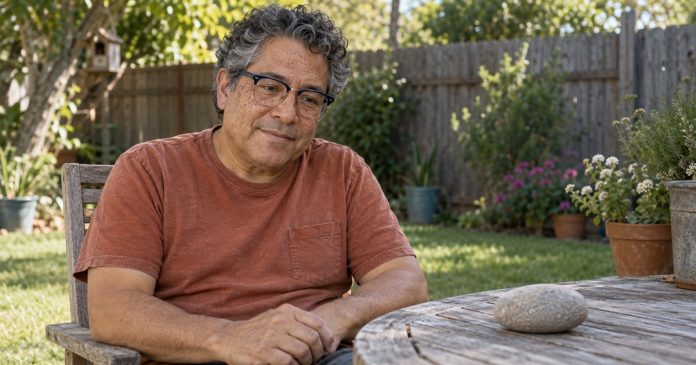
Man seated beside a smooth stone on a weathered table in an ordinary backyard.

Quick Guide

“Opening the third eye” is spiritual language, not a medical procedure or a guaranteed route to clairvoyance. The five steps below offer a short, optional attention exercise: get comfortable, breathe without forcing, choose a simple focus, notice what happens, and finish with a grounded reflection. Keeping your eyes open is welcome.

You may have encountered third-eye exercises that ask you to picture numbers, concentrate between your eyebrows, or wait for a special sensation. It is reasonable to be curious about those practices. It is also reasonable to prefer an ordinary observation exercise, find visualization unhelpful, or stop completely.

This version keeps the original five-step structure without asking you to activate a gland, produce a vision, or interpret discomfort as success. Its purpose is to help you notice the difference between what you choose to imagine, what you observe, and what you later infer. It is not a diagnostic tool, a treatment, or a test of spiritual worth.

What “Third Eye” Means Here

In this article, third-eye language is used as a contemplative metaphor for inner awareness. It should not be confused with ordinary eyesight or with evidence that a person can see hidden facts. A meaningful image can remain meaningful without becoming a prediction.

The pineal gland is a real endocrine organ. The medical reference Endotext’s account of pineal physiology describes its role in producing melatonin and conveying information about the light-dark cycle. That physiology does not establish that visualizing numbers opens a psychic channel. Nor does the presence of a pinecone in religious art establish a biological mechanism for clairvoyance.

For a broader reflection on the language, see opening your third eye to find your path. If your real question is whether you are allowed to stop, go directly to closing your third eye and setting practice boundaries. You do not have to complete an opening exercise first.

1. Get Comfortable and Choose a Limit

Pick a familiar place where you are not driving, supervising something hazardous, or needing to divide your attention. A normal chair at home or a seat in your yard is enough. There is no need for special equipment, incense, darkness, a paid session, or a carefully decorated meditation room.

Choose a short boundary before starting: “I will try this for a minute or two, and I can stop sooner.” This is a practical limit for the optional exercise, not a research-backed dose or an instruction to persevere until the time is up. Sit in a position that is comfortable for you and leave your eyes open if you prefer.

Before beginning, jot down one ordinary observation about your current state: “I am curious,” “I am distracted by work,” or “I do not feel like doing this today.” The last answer is a valid reason to skip the exercise. Avoid beginning with a prediction such as “I will definitely see a message,” which turns a simple activity into a performance demand.

2. Breathe Comfortably, Without a Test to Pass

Let your breathing remain gentle. You do not need to take the largest possible breath, hold it, count perfectly, or prove that you are breathing from the right place. If paying attention to breathing is uncomfortable, leave it alone and use an object in the room as your focus.

The NHS breathing guidance emphasizes comfortable, unforced breathing. This article’s short imagination activity is not the NHS’s full breathing routine and does not require changing your breathing pattern. Stop if you feel dizzy, strained, or unwell; do not label that feeling an awakening.

There is nothing to earn by making the exercise more intense. The useful question is whether the activity feels manageable, not whether you can produce a particular physical sensation.

3. Choose One Simple Focus

If you enjoy voluntary imagery, think of the number one for a moment. You might picture a printed digit, think the word “one,” or simply understand the idea without seeing an internal picture. Let any image be faint, brief, or absent. You do not need to hold it still.

If numbers feel tedious, choose a familiar shape such as a circle. Keep the task ordinary: “I am thinking about a circle,” rather than “A circle is being sent to me.” Do not use another person’s private life, a frightening event, or an important medical or financial decision as the subject.

Research summarized by the University of Exeter describes variation in mental imagery, including aphantasia. Lacking voluntary visual imagery does not mean lacking imagination. This exercise cannot diagnose aphantasia, and it should not promise that practice will make everyone see mental pictures.

An Eyes-Open Alternative

Look at an ordinary object already nearby: a cup, a leaf, or a smooth stone. Blink naturally and notice two visible details, such as its color and outline. You can then write those details down. Do not stare at a bright light, suppress blinking, or try to project another image into your surroundings.

This is a direct observation exercise, not an advanced stage of clairvoyance. If you would rather use a word or a simple sketch, that also works as a way to record your attention. Choose the version that asks less of you, not the version that sounds more impressive.

4. Notice, Rather Than Escalate

If you pictured “one” and still want to continue, you may try “two.” You can also stop with the first number. Reaching ten does not certify a gift, and losing track does not mean that something is blocked.

Notice the difference between a chosen image and an added interpretation. “I thought of a blue circle” describes the activity. “The blue circle means my friend will call tomorrow” adds a claim that the exercise does not establish. There is no need to turn the image into a message at all.

A wandering thought is simply something to record or leave alone. You may return to the chosen focus once, change to the eyes-open version, or finish. Avoid repeatedly restarting until the experience seems significant. You do not need a dramatic result to justify the time you spent.

Do not monitor your forehead for proof. Tingling, pressure, or a lack of sensation cannot certify a spiritual opening. If an uncomfortable symptom appears, stop and treat it as a health concern when appropriate, not as a reason to push further.

5. Finish With a Before-and-After Reflection

End deliberately. Look around the real room or yard, notice something familiar, and return to an ordinary activity. You do not need an elaborate closing ritual to make stopping legitimate.

A short record can keep observation separate from interpretation:

  • Before: What was I hoping to do, and how did I feel?
  • Chosen task: A number, a word, a sketch, or an object?
  • What happened: Describe only what you noticed, including no image or distraction.
  • Interpretation: What meaning did I add, if any?
  • After: Did I feel comfortable, unchanged, distracted, or unsettled?
  • Next choice: Leave it there, choose a different activity, or discuss a concern with someone appropriate.

This is a reflection note, not a psychic score. “Unchanged” and “not for me” are useful outcomes. You may decide that reading, drawing, gardening, or taking a quiet break suits you better.

A Fictional Example: A Number Is Not a Message

The following example is fictional. Rafael tries the exercise at his kitchen table. He thinks of the number one but sees no clear internal picture. He then notices the rounded handle of his green mug and writes, “Green mug, curved handle, distracted by tomorrow’s appointment.”

He is tempted to interpret the number one as a sign that an appointment will go perfectly. Instead, he records that this was an association he added after choosing the number. He checks the appointment time in his actual confirmation message and puts the notebook away.

The useful result is not a prediction or an awakening. Rafael distinguished an ordinary thought from information he could verify, and he stopped without trying to force a more impressive experience.

When to Stop and Seek Support

The National Center for Complementary and Integrative Health notes that meditation practices vary, evidence about harms is limited, and negative experiences can occur. Meditation should not replace healthcare or delay assessment. This brief exercise is optional and is not a treatment recommendation.

Stop if it leaves you distressed or feeling less connected to your surroundings. If unusual experiences persist, interfere with sleep or daily life, or feel difficult to manage, seek qualified support. An image is not a diagnosis, an instruction to change medication, or a command to harm yourself or someone else. If you cannot stay safe, seek immediate local emergency help.

New visual symptoms deserve particular care. The NHS advises urgent assessment for new or suddenly increased floaters or flashes, a dark curtain or shadow, or accompanying blurred vision or eye pain. Do not explain these away as third-eye development.

You can remain interested in spirituality while taking ordinary health concerns seriously. Choosing not to continue is a complete decision, not a failure to finish a process.

Frequently Asked Questions

Is the third eye a medical organ?

The third eye is a spiritual concept, not a separate medical eye that this exercise opens. The pineal gland is a real endocrine organ involved in melatonin production, but that does not establish it as a channel for psychic information.

Can visualization guarantee psychic perception?

No. Imagining a number, remembering a shape, or noticing a vivid image does not demonstrate knowledge obtained beyond the ordinary senses. Treat the exercise as optional attention or imagination practice, not a psychic test.

Do I have to close my eyes?

No. Keep your eyes open if that is more comfortable. You can look at an ordinary object, blink naturally, and describe what is actually present without trying to create another image over it.

What if I cannot picture the numbers?

Use words, a simple drawing, or direct observation instead. People differ in their ability to form mental images. A blank mental picture is not a spiritual failure, and you do not need to force one.

Does forehead tingling mean my third eye is opening?

A sensation alone does not prove a spiritual awakening. Do not press on your forehead or continue an uncomfortable exercise to intensify it. Stop if you feel unwell and seek appropriate care for new, persistent, or concerning symptoms.

How long should I practice?

This optional version is deliberately brief: one or two minutes is enough to try it, and you may stop sooner. There is no required daily streak, progression to ten numbers, or deadline for producing imagery.

What should I do if an exercise feels distressing?

Stop the exercise, look around your actual surroundings, and return to a familiar activity if you can. Do not treat distress as a required breakthrough. Seek professional support if symptoms persist or affect daily life, and urgent help if you cannot stay safe.

Psychics Can Help in Relationships

Two adults talking calmly across a white stone table in a sunlit lounge.

A relationship reading may offer a conversation, a symbolic prompt or a spiritual perspective you find meaningful. That is different from knowing your partner’s private thoughts, detecting infidelity or repairing a relationship. If you choose a reading, treat it as optional reflection—not evidence about another person or a substitute for qualified support.

Decide what kind of help you want

Before booking, name the practical question. Do you want to prepare for a conversation, clarify your own needs or consider a boundary? Those goals are different from asking a stranger to establish what your partner secretly feels.

You may find that writing the question down or talking with a trusted person is enough. If you want professional support, look for relevant qualifications rather than assuming that “relationship specialist” or “psychic counselor” establishes them.

A reader may also hold a separate professional qualification, but the roles should be made clear. Do not assume a spiritual service follows the same standards or provides the same care as a licensed professional service.

Turn hidden-knowledge questions into questions about your choices

A reflective question leaves the decision with you. It does not need a prediction to be useful.

On a small screen, scroll the table sideways to read every column.

Question seeking certainty More grounded question Where to seek clarification
What does my partner secretly think? What do I need to ask or explain? A direct conversation, if safe.
Will my ex return? What contact, if any, am I willing to have? Your own boundaries and the other person’s stated wishes.
Are they cheating? What facts support my concern, and what support do I need? Relevant evidence and appropriate help, not a card or aura interpretation.
Are we destined to stay together? Does continuing fit our freely expressed goals and conduct? Ongoing choices, compatibility and safety.

This is an editorial framework for reflection. It does not mean that asking a better question makes a psychic claim reliable.

Understand the limits of tarot, aura and intuitive claims

A card image can prompt you to think about a theme, much as a story or a journal question can. Its interpretation does not independently establish a fact about someone who is not present.

Similarly, a claim about an aura does not verify attraction, honesty, health or emotional state. Do not use it to label your partner, demand access to accounts or decide that a confrontation is necessary.

If a statement feels remarkably personal, examine its wording and the information already shared. Our guide to psychic trust explains why feeling understood and verifying a claim are separate questions.

Agree on scope, cost and privacy before starting

Ask the price, session length, payment terms and whether additional services will be offered. Decide your own spending limit in advance. Do not treat a longer or more expensive session as a requirement for getting the “real” answer.

Ask whether notes or recordings are made and how your information will be handled. Avoid sharing passwords, financial access or private communications belonging to someone else. You can discuss your own experience without providing an unrestricted record of another person’s life.

A useful script is: “I want to discuss my own choices. I do not want predictions about my partner, and I will not purchase additional services today.” You can end the session if that scope is not respected.

Our first-reading guide provides a broader checklist for price, consent and expectations.

Notice pressure disguised as guidance

Be cautious about claims that you must act immediately, keep the advice secret or pay to remove an alleged relationship curse. Report Fraud describes psychic scams involving paid solutions to supposed trouble. A frightening claim does not establish a real threat.

You do not need to purchase another reading to challenge the first one. Pause, keep relevant records and seek an independent perspective if you feel pressured.

Also reject the idea that an unclear or inaccurate reading is your fault for withholding private details or having the wrong attitude. Consent includes the freedom to decline questions.

Keep safety separate from saving the relationship

Not every troubled relationship deserves or requires another chance. If threats, intimidation or coercive control are present, prioritize safety-focused support. Do not arrange a confrontation or joint session because a reader says it will repair things.

The National Domestic Violence Hotline cautions that you cannot make an abusive partner change and does not recommend couples counseling in abusive relationships. A spiritual reading is not a safety plan.

For relationships without abuse, you can consider a direct discussion or qualified counseling if both people want it. Neither option guarantees reconciliation. Our forgiveness guide distinguishes forgiveness, trust and continuing a relationship.

Leave with one decision you own

After a reading, separate a useful reflection from a factual claim. “I realized I want more notice before plans change” is something you can discuss. “The reader says my partner is hiding something” remains an unverified statement.

Write one practical next step, such as preparing a question or deciding not to book another session. Check that the step respects both your limits and the other person’s consent.

You do not need to feel clearer, calmer or more committed for the experience to count as finished. If it was not helpful, you can acknowledge that and stop. Your relationship decisions remain yours.

Key Takeaways

  • A reading is optional reflection, not infidelity detection.
  • Set limits on spending, topics and private information.
  • No prediction creates an obligation to reconcile.
  • Use relevant evidence, direct communication and appropriate support for consequential decisions.

Frequently Asked Questions

1. Can a psychic tell me whether my partner is cheating?

Do not treat a reading as evidence of infidelity. Address concerns through relevant facts, safe communication and appropriate support; do not accuse or surveil someone because of a prediction.

2. Can a reading guarantee that a relationship will be repaired?

No. A reader cannot guarantee another person’s choices or a relationship outcome. You are not obligated to reconcile or offer another chance because a reading recommends it.

3. What questions are more suitable for reflection?

Focus on your own choices, such as what you need to discuss, which boundary matters or what information is missing. Avoid treating answers about another person’s private thoughts as established facts.

4. Must I disclose every private detail for a reading to work?

No. You can decline questions and limit what you share, including information about other people. A claim that you must reveal more to get an accurate result does not override privacy or consent.

5. Is a relationship reading the same as counseling?

No. A psychic title does not establish a counseling qualification. If you need professional relationship or mental health support, seek an appropriately qualified provider and clarify their role.

Source scope: Report Fraud supports the scam warning and the Hotline supports the abuse-related caution. The comparison table and scripts are editorial consumer guidance; they do not validate psychic claims or replace professional advice.

5 Important Facts About Clairvoyant Psychic Readings

Man with teal glasses holding a pencil over a notebook in a bright winter garden.

A clairvoyant reading is usually presented as a consultation based on “clear seeing”: images or impressions that the practitioner interprets as information beyond ordinary senses. That describes the service’s claim, not an established guarantee that its statements are accurate. Before paying, it helps to know what can be checked and what remains a belief or interpretation.

The five facts below address ability claims, unusual experiences, differing viewpoints, the “third eye,” and the use of tools. They also connect those topics to practical choices about price, privacy, consent, and how to assess a session afterward.

1. A claimed ability is different from a verified service outcome

People use clairvoyance in different spiritual and personal ways. Some describe spontaneous images, some interpret symbols, and some use the term broadly for intuitive impressions. A practitioner’s confidence, training label, or explanation of their gift does not by itself establish access to hidden information.

You can assess ordinary parts of the service more directly: whether the format matched the booking, whether the rate was explained, whether the reader listened, and whether your request to stop was respected. A thoughtful conversation may be personally useful while its paranormal explanation remains unverified.

Do not assume that a reading will solve a relationship, career, health, or money problem. Decide what you are seeking—perhaps reflection on a question—and what belongs with a qualified professional or a direct conversation with the person involved. For a broader evidence discussion, see Are Psychics Real?

2. A striking experience is not automatically proof of clairvoyance

Thinking of someone before a message arrives or dreaming of something that later seems familiar can feel important. Before assigning a cause, ask what was recorded in advance, what information was already available, and how many similar impressions did not match anything.

A broad statement can fit more than one event. A remembered prediction may also sound more precise after the outcome is known. Keep the original wording and do not turn a resemblance into a certainty simply because it feels meaningful.

The same care applies to claims about children. Imagination, stories, dreams, or an unusual report should not be used to assign a child a psychic identity. Do not coach a child to produce special experiences or make them responsible for adult decisions. If an experience is distressing or raises a health or safety concern, seek appropriate professional guidance rather than assuming a spiritual explanation.

3. Interpretation can differ, but contradiction still matters

Readers may use different language, methods, assumptions, and information. That can explain why accounts differ without establishing that every account is true. “They each see from their own viewpoint” is not a sufficient answer when two concrete claims conflict.

Compare like with like. One reader saying “you seem ready for change” is offering a broad interpretation. Another saying “you will receive a signed job offer from a named company by Friday” makes a specific claim. The second can be checked against a deadline; the first needs clarification before it can be assessed as a prediction.

If readings conflict, pause rather than paying repeatedly until one answer feels reassuring. Return to current facts, your own values, and information you can verify. You do not have to choose a reader’s version of events over another person’s stated wishes or a documented fact.

4. The third eye is a spiritual concept, not a proven gland-based explanation

Some traditions use the third eye as a symbol of insight. The pineal and pituitary glands, however, are not scientific proof of clairvoyance. Endotext describes the pineal gland’s role in melatonin physiology, while IQWiG explains the pituitary gland’s hormone-regulating functions. Those biological roles do not demonstrate access to hidden events or another person’s thoughts.

Be cautious if a service invokes neuroscience to make a spiritual claim sound established. Ask what was actually measured and whether the evidence supports that exact claim. Knowing that a gland exists is not evidence that a practitioner can use it to predict your future.

You do not need to take supplements, alter medication, fast, or attempt a “detox” to participate in a reflective conversation. A reading should not replace medical assessment or be used to diagnose a problem with your glands.

5. Tools describe a method, not its accuracy

A reader may use tarot cards, runes, tea leaves, a crystal ball, or no visible tool. A tool can provide symbols or structure for interpretation. Its presence does not prove that information comes from beyond ordinary sources, and working without a tool does not establish a superior ability.

Ask how the method will be used. Will the reader explain a symbol as a prompt for reflection, or make a claim that a specific event must happen? Can you disagree with an interpretation? Are extra services or objects being sold during the conversation?

Choose based on the service you want, the terms you can understand, and the boundaries you are prepared to maintain. Do not assume that elaborate props, an expensive package, or a dramatic explanation makes a reading more reliable.

Before booking: a short consumer checklist

  • Scope: what questions are covered, and what will the reader not do?
  • Format: phone, chat, video, email, or in person; confirm how the session starts and ends.
  • Cost: check the currency, rate, package conditions, and maximum authorised total.
  • Timing: confirm the appointment or delivery expectation and any charges for extension.
  • Cancellation and support: read the current terms, deadlines, and process before paying.
  • Privacy: ask what is recorded or retained and avoid sharing unnecessary personal details.
  • Consent: decide what you are comfortable discussing and how you will stop.

Policies differ between providers and can change. Do not assume a general satisfaction claim guarantees a refund or that an introductory price applies to every session. Save the relevant booking terms and receipt. What to Expect From Your First Clairvoyant Reading offers a fuller preparation guide.

Afterward: keep symbols, claims, and service notes separate

Use three headings in your notes so that a useful reflection does not become evidence for an unrelated prediction.

  • Symbol or interpretation: “The bridge may represent a transition.” Note your own association without treating it as an event that must occur.
  • Specific claim: record exactly who, what, and when, together with the information you supplied and what would count as a miss.
  • Service observation: record the actual format, duration, charge, communication, and response to boundaries or problems.

Keep wrong and unresolved statements alongside apparent matches. If you share a review, describe only your own experience and omit private information. A clear account of conduct is more useful than a claim that one conversation proves universal accuracy.

A fictional example: useful reflection, unconfirmed prediction

Fictional illustration, not a customer testimonial: Daniel books a short reading to reflect on a possible job change. A bridge symbol prompts him to think about training, which he finds useful. The reader also says a recruiter will contact him before Friday.

Daniel writes those as separate notes. No recruiter contacts him by the deadline, so he records that claim as a miss. He still researches a course because it fits his goals, not because the missed prediction must be rescued with another reading. He also checks that the charge matched the agreed session.

This approach allows a nuanced review: the conversation prompted an idea, the concrete prediction did not occur as stated, and the service terms can be assessed on their own.

Pressure is a reason to stop, not a test of belief

The UK’s Report Fraud guidance on psychic scams describes approaches that use promised fortunes or feared trouble to demand payment, including claims about lottery numbers or removing curses. Treat fear-based payment demands as a warning, not evidence that danger has been detected.

Stop if someone demands secrecy, escalates fees, requests passwords or recovery codes, or claims that only they can protect you. Do not send additional money to make an earlier payment “work.” If you suspect fraud, retain relevant records and contact the appropriate payment provider and reporting service for your location.

A reading should leave you free to question, decline, and seek ordinary support. It should not transfer control of your decisions to a stranger.

Frequently Asked Questions

What is a clairvoyant psychic reading?

It is a service in which a practitioner interprets impressions described as inner seeing or perception beyond ordinary senses. That description is a spiritual claim, not proof that the information is accurate or that a particular mechanism has been established.

Are the pineal and pituitary glands scientific proof of a third eye?

No. These glands have established roles in hormone regulation, including melatonin production by the pineal gland. Those biological functions do not demonstrate clairvoyance or validate a reader’s claims.

Why might two readers give different answers?

Their methods, interpretations, information, assumptions, and wording may differ. A disagreement does not establish that both accounts are true, and buying additional readings does not necessarily resolve it.

Does using tarot or a crystal ball make a reading more accurate?

The presence or absence of a tool does not establish accuracy. Ask how the practitioner uses it, and evaluate the actual statements, service conduct, and evidence rather than the prop.

What should I confirm before paying?

Confirm the format, scope, rate, currency, total limit, timing, cancellation and support terms, and how private information is handled. Check the current booking information rather than relying on an old review or headline offer.

How do I evaluate a specific prediction?

Record the exact wording, deadline, prior information, and matching rule before the result is known. Compare the outcome without broadening the claim, and include misses and unresolved statements.

Which warning signs mean I should stop?

Stop for coercion, secrecy demands, escalating fees, curse-removal threats, requests for sensitive account access, or instructions to ignore qualified care. You do not need to keep paying because someone claims only they can prevent harm.

The Clairvoyance Energy Fields

Woman with a silver bob and amber glasses looking at a colored sculpture in a gallery

“Clairvoyance energy fields” usually refers to a spiritual idea: that a person is surrounded by an aura or subtle field containing information a clairvoyant can perceive. That is different from saying the field has been measured, that its colors diagnose illness or that a reader can reliably see the future through it.

The distinction matters because “energy” is used in several ways. Someone may say a room has welcoming energy as a metaphor. A spiritual practitioner may mean an aura. A neuroscientist may mean a measurable physical signal. Using the same word does not make these explanations interchangeable.

Quick Guide

Ask what “field” means, how it is measured and what the claim actually predicts. Separate personal symbolism from checkable facts. An aura interpretation is not a health assessment, and the existence of electrical activity in the brain does not validate a psychic reading.

What a reader might mean by an energy field

In an aura-style reading, a practitioner may describe colors, impressions or imagined layers around a person. Another may speak about emotional atmosphere or intuitive imagery without claiming to see anything physically. Ask which kind of experience they mean before treating different descriptions as evidence of the same phenomenon.

For instance, “I associate blue with a wish for calm” is a symbolic interpretation. “Blue proves that your throat is unhealthy” is a medical claim. The second requires evidence and appropriate clinical assessment; it does not become reliable because the first feels meaningful.

Our guide to aura color symbolism explains how color associations can be used reflectively without assigning someone a fixed personality or health status. You are free to reject an interpretation, even if it is offered confidently.

Measurable biology is a different claim

The brain does generate physical signals that specialized instruments can measure. The National Institute of Mental Health explains that EEG measures electric fields generated by the brain, while MEG measures magnetic fields. MEG uses sensitive equipment to detect weak signals associated with brain activity.

Those measurements do not establish that a person can visually read someone’s character, future or medical condition from a spiritual aura. To connect the two claims, a proponent would need evidence for that specific connection, not merely the observation that the body has electrical activity.

Similarly, words such as “frequency,” “quantum” or “hologram” are not explanations on their own. Ask for a defined measurement, a clear method and a result that could turn out to be wrong. Describing consciousness as a hologram or DNA as a psychic code should not be presented as settled biology.

What the pineal gland actually tells us

The pineal gland is a real part of the brain, not an unexplained placeholder for every claim about a third eye. The endocrinology reference Endotext describes its role in producing and releasing melatonin in relation to the light-dark cycle. This is an established biological function; it does not demonstrate extrasensory sight.

Third-eye imagery can have spiritual meaning for an individual. That meaning should remain distinct from an anatomical claim that the pineal gland receives messages from spirits or hidden dimensions. You do not need to alter your sleep, take supplements or buy a “decalcification” program to participate in symbolic reflection.

If an exercise involving the third eye makes you uncomfortable, you can stop. Our article on taking a break from third-eye practices offers ordinary, non-compulsory ways to step away. Pausing does not require another ritual or a paid repair.

Does research on healing energy establish these fields?

Different practices make different claims, so evidence should be matched to the exact claim. As one relevant example, NCCIH states that there is no scientific evidence for the energy field proposed in Reiki. Its discussion also notes that Reiki has not been clearly shown effective for health-related purposes.

That source addresses Reiki; it is not a review of every personal spiritual experience. Its relevance here is the need to distinguish a proposed healing field from an established physical measurement. Neither a warm sensation nor a reassuring session establishes that a practitioner detected or changed a medically meaningful field.

A reader should not use an energy interpretation to diagnose an illness, tell you that tests are unnecessary or recommend stopping prescribed treatment. Feeling reassured does not independently verify that your health is fine. Seek appropriate care for symptoms and discuss treatment decisions with qualified health professionals.

Keep observation and interpretation on separate lines

If you want to examine an impression, write what happened before deciding what it means. A simple record might include:

  • Observation: What did you actually notice? Avoid adding a cause to the description.
  • Context: What were the lighting, setting and ordinary sources of information?
  • Interpretation: What meaning did you or the reader attach to it?
  • Check: Is there a specific claim that can be verified independently?
  • Result: What matched, what did not and what remains unknown?

In this fictional example, Mina writes, “During the session, I pictured a blue outline.” The reader says it means a move is coming. These are two separate entries: Mina’s experience and the reader’s prediction. Neither establishes the other. If “a move” can later mean a new home, a holiday or moving furniture, the prediction was too flexible to check fairly.

Do not repeatedly stare at people, lights or reflective surfaces to try to force an effect. Respect other people’s privacy and consent. For a more structured low-stakes record, see recording impressions before outcomes.

How to assess an impressive story

An account of a trance, a striking coincidence or an apparent prediction may be interesting without resolving how it happened. Before treating a story as evidence, ask whether the exact claim was recorded beforehand, what information was already available and how many other claims failed.

A famous name, an old date or a government-funded project is not a substitute for those details. Historical reports should be evaluated as reports, not retold as proof that a trance diagnosis was medically correct. A list of researchers also does not establish a single mechanism shared by clairvoyance, telepathy and prediction.

Likewise, an emotionally meaningful impression involving someone who has died does not oblige you to accept a seller’s explanation. You can value the experience while remaining uncertain about its cause. You do not owe anyone payment to confirm that meaning.

Boundaries that keep exploration grounded

Ask a reader whether the session is presented as spiritual reflection or factual assessment, what it costs and whether you can decline questions. Be cautious if a supposed field defect becomes a reason for urgent fees, secrecy or repeated appointments.

Do not use an aura label to judge another person’s honesty or moral worth. A color interpretation does not override their words, consent or actual behavior. Health, financial and safety decisions need appropriate real-world information.

Finally, do not automatically interpret new visual symptoms as clairvoyance. Seek professional advice for concerning changes, and urgent care when symptoms are sudden or severe. Spiritual language can remain meaningful without becoming a barrier to ordinary support.

Frequently Asked Questions

What are clairvoyance energy fields?

The phrase usually describes a spiritual belief that information or qualities surround a person and can be perceived clairvoyantly. It is not the name of an established clinical measurement or a validated way to diagnose health conditions.

Are spiritual auras the same as the brain’s measurable fields?

No equivalence has been established by simply using the word energy. EEG and MEG measure specific physical signals using instruments. That does not show that an aura reading can reveal health, character or future events.

Is the pineal gland a proven source of clairvoyance?

The pineal gland has an established role in producing melatonin and conveying information about the light-dark cycle. That biology does not establish it as an organ for perceiving spirits or hidden information.

Does seeing a color mean I have read someone’s aura?

A color impression alone does not establish its cause or tell you facts about another person. Describe the experience without assuming an interpretation, and seek appropriate care for new or concerning visual symptoms.

Can an energy-field reading diagnose illness?

Do not use it as a medical diagnosis, a reassurance that you are healthy or a reason to change treatment. Health concerns need appropriate assessment by qualified professionals.

Can I explore energy-field beliefs without accepting every claim?

Yes. You can use imagery or color as personal symbolism while keeping factual claims separate. Record what you observed, consider other explanations and avoid making important decisions on an unverified interpretation.