

Activities described as “developing clairvoyance” often mix ordinary observation, imagination, dream journaling, and claims about extrasensory perception. It helps to know which part you are practising. Remembering an object more accurately or describing a scene clearly is not the same as receiving information beyond ordinary senses.
This guide offers six low-stakes activities for exploring the topic with clear limits. They are not proven methods for producing psychic ability. Their practical aim is to help you notice details, distinguish impressions from facts, and keep records that do not hide uncertainty.
Quick Guide
- Choose one activity: a short session is enough; there is no required training schedule.
- Name the skill: observation, recall, imagery, and a prediction are different things.
- Write first, check later: preserve the original wording before you see an answer.
- Keep the whole record: include misses, cues, and unclear outcomes.
- Stop for discomfort: flashes, blurred vision, lost sleep, or distress are not milestones.
- Keep major choices separate: health, money, relationships, and safety need evidence and consent.
What Clairvoyance Means in This Context
In spiritual discussions, clairvoyance usually refers to claimed clear seeing: images or visual information attributed to a source beyond ordinary sensory access. People use the term in different ways, so ask whether a teacher means visual imagination, symbolic reflection, or an actual claim about unknown information.
An exercise can be enjoyable without proving its advertised explanation. You do not need to believe every impression in order to explore it. In fact, leaving room for error is essential if you want to learn anything from a record. Psychics and Clairvoyant Psychics explains the terminology in more detail.
Before You Begin
Use an ordinary, well-lit setting where you can stop easily. Choose a time when you are not driving, supervising a hazard, or doing anything that requires your full attention. Paper, a pencil, and a few familiar objects are sufficient.
No crystal purchase, special diet, fasting, sleep restriction, breath-holding, or prolonged staring is needed. The time suggestions below are simply convenient limits, not researched doses. Skip any activity that does not suit you, and do not interpret a quiet or uneventful session as a blocked gift.
Activity 1: Observe Three Objects
Purpose: distinguish what you directly see from what you assume.
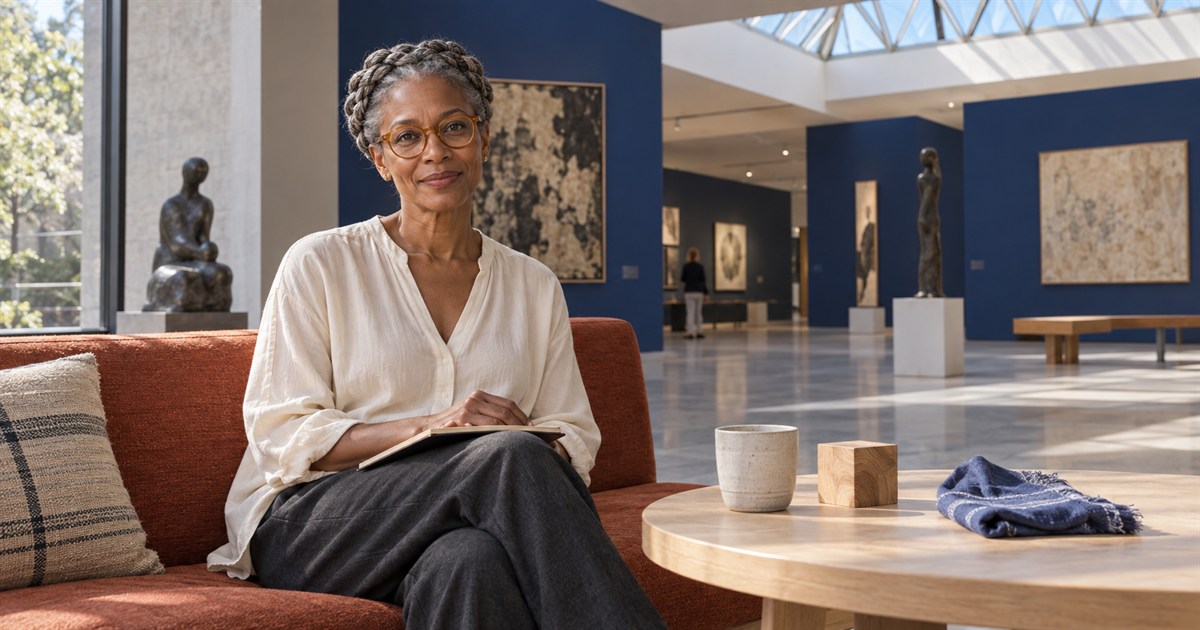
Place three ordinary objects on a table, such as a cup, a wooden block, and a folded cloth. Look at them normally for about a minute. Write five visible details: colour, shape, position, texture, or a mark you can point to.
Next, add one inference and label it clearly. “The cup has a chip on the rim” is an observation. “The cup belongs to someone careless” is an unsupported story about a person. Check your observations against the objects and correct anything you misdescribed.
Useful result: a short list in which facts and inferences are visibly different. Do not try to infer an object owner’s private history or treat a feeling about the item as knowledge.
Activity 2: Recall Without Filling the Gaps
Purpose: compare a memory with something you can check.
After observing the objects, turn away or cover them. Write the details you remember without looking again. Mark uncertain details with a question mark rather than making them sound definite. Then uncover the objects and compare.
Count correct details, incorrect details, and details you left uncertain. Keep all three categories. If you practise again another day, remember that familiarity with the objects can affect the result; it is not a fresh test of unknown information.
Useful result: a more honest picture of what you remembered. Better recall of something you saw is not evidence of clairvoyance. For a related discussion, see Is Your Memory Strong and Reliable?
Activity 3: Compare a Mental Picture With a Description
Purpose: explore your preferred way of representing an idea.
Choose a familiar object. If comfortable, imagine it briefly, then describe it in words or make a simple sketch. You may keep your eyes open. Notice whether a visual image, a verbal description, or knowledge of the object’s features comes more easily.
There is no correct vividness score. The University of Exeter describes variation in mental imagery, including aphantasia, without equating the absence of visual pictures with an absence of imagination.
Useful result: knowing whether words, sketches, or direct observation suit you. Do not force a picture, strain your eyes, or assume that a vivid image must be true.
Activity 4: Keep a Dream Record Without Searching for Predictions
Purpose: preserve a recollection before later events reshape its interpretation.
If you remember a dream after normal sleep, write a few details and the date. Separate the dream itself from your associations. “There was a train” is content; “I think it represents change” is interpretation.
Do not set alarms to repeatedly interrupt sleep or spend the day hunting for matches. If an event later reminds you of the dream, compare it with the original record, including mismatches and broad details that could fit many situations.
Useful result: a clearer record of what you remembered. A resemblance after the fact is not, on its own, proof of a prediction.
Activity 5: Record One Low-Stakes Impression in Advance
Purpose: make the difference between a checkable statement and a flexible story visible.
A statement such as “something surprising will happen” can fit almost anything. A statement that specifies one outcome and a clear time or task gives you a way to recognise a miss. Keep the exercise trivial, such as a casual game with agreed rules, and never use it for gambling or consequential choices.
Before the outcome is known, write the statement, the scoring rule, information already available to you, and anything that might provide a cue. Afterward, record a match, miss, or unresolved result without changing the original words. Do not discard attempts you dislike.
Useful result: a record you can inspect honestly. Specific wording is necessary for a fairer test, but it is not sufficient: chance, concealed answers, fair selection, independent checking, and enough data also matter.
Activity 6: Review the Whole Record
Purpose: evaluate the process instead of collecting only impressive moments.
After a few brief entries, read them together. Were the statements specific? Did you know more than you first admitted? Did you record misses? Did your interpretation change after an event? Would another person understand the scoring without asking you to explain away inconsistencies?
Write one adjustment for a future entry, such as recording uncertainty more clearly. You can also decide that the activity is not useful and stop. You do not need another course to be allowed to reach that conclusion.
A Worked Example: The Detail That Was Added Later
Fictional example: Sasha observes a table with a blue cloth, a white cup, and a wooden block. After turning away, she writes, “The cup has a handle on the right.” When she checks, she sees that the cup has no handle.
Instead of treating the error as a symbol, she records that she supplied a familiar feature that was not present. The next time, she distinguishes “I saw” from “I expected.” The exercise has produced something useful: a more careful description of her own observation process. It has not uncovered a message about the cup’s owner or proved a psychic gift.
A Simple Session Record
Copy these headings for one activity:
- Date, activity, and time limit.
- What I directly observed or already knew.
- What I imagined, recalled, or predicted.
- What would count as correct, incorrect, or unclear.
- Possible cues and alternative explanations.
- The complete result, including errors.
- One thing to change—or my decision to stop.
This personal record is not formal preregistration. The Center for Open Science describes preregistration as specifying a research plan before a study. A notebook can borrow the habit of writing expectations first, but it does not replace controlled conditions or independent evaluation.
Health and Decision Safeguards
Do not pursue flashes, sparkles, or blurry sight as training results. NHS guidance calls for urgent assessment of first-time or sudden flashes or floaters, particularly with blurred vision, pain, or a dark curtain or shadow. Seek appropriate local eye care rather than waiting to interpret the symptoms.
If an exercise causes distress, interferes with sleep, or makes you feel unable to stop checking for signs, pause. If you see or hear things others do not, especially outside a chosen exercise, seek medical advice rather than assuming you need more psychic training.
Never use an impression to change treatment, make a major purchase, accuse someone, or override their boundaries. A useful exploration should leave you better able to distinguish what you know from what you do not. For the broader context, 9 Signs of Clairvoyance explains why common experiences are not proof of an ability.
Frequently Asked Questions
Can these activities prove that I am clairvoyant?
No. They practise observation, imagery, memory, and careful recording. Improvement in those skills does not establish that information came from a paranormal source.
What does clairvoyance mean here?
In spiritual discussions, it means claimed clear seeing or information received through images beyond ordinary senses. That is the belief being explored, not an established explanation for every dream or mental picture.
Do I have to close my eyes or meditate?
No. You can keep your eyes open and use words, sketches, or ordinary observation. Stop any exercise that feels uncomfortable; there is no requirement to produce an unusual experience.
What if I cannot visualise an object?
Use a written description or look at the object directly. Mental imagery varies between people, and an inability to form pictures does not make you less creative or less worthy.
What would make a test fairer?
Define the task and scoring before the answer is known, prevent access to cues, use a fair selection method, record every attempt, and have results checked independently. A small informal exercise is not proof of psychic ability.
Are flashes, sparkles, or blurred vision progress?
Do not treat visual symptoms as training progress. Seek appropriate eye-care advice for new or sudden flashes or floaters, especially with blurred vision, pain, or a dark curtain or shadow.
How can I tell whether practice was useful?
Look for a clearer distinction between observation and inference, more complete records, or better recall of details you actually saw. Useful practice should not require lost sleep, escalating costs, or reliance on impressions for important decisions.