

“Raise your vibrations” is often used in spiritual self-care language to mean feeling lighter, more connected or more engaged with life. You can enjoy that metaphor without treating your mood as a measurable energy frequency or believing that positive thoughts control what happens to you.
Sometimes a favorite song, a small creative project or a comfortable pause is welcome. Sometimes you are tired, sad or angry, and the most useful choice is rest, practical help or being honest about a difficult situation. Neither response makes you spiritually better or worse.
Quick Guide: Keep It Small and Optional
- Choose one activity you actually want to try, not a full list of obligations.
- Use things you already have and set a time or spending limit.
- Adapt for your body, sensory needs and available energy.
- Notice the result without demanding an instant mood change.
- Do not blame yourself for hardship or difficult emotions.
- Use professional support when self-care is not enough.
What “High Vibration” Can—and Cannot—Mean
In this article, vibration is a metaphor for a subjective state, not a scientific scale. We are not measuring how much joy someone has, how spiritually advanced they are or whether they can communicate with a guide. A person who is struggling is not less deserving of kindness than someone who appears cheerful.
There is also no basis here for a promise that sending out good energy guarantees good events in return. Your choices can affect what you do, but they do not control every circumstance or another person’s behavior. A difficult day is not evidence that the universe is punishing your attitude.
Everyday wellbeing advice has a different focus. The NHS outlines connection, activity, learning, giving and present-moment awareness as possible supports for wellbeing. That does not establish an energy field or make any single hobby a treatment. The ideas below are a menu of ordinary choices, not a prescription.
1. Listen to Music You Actually Enjoy
Pick one song or a short piece you already like. You can listen while seated, hum along or simply notice an instrument. You do not need a particular frequency, a “high-vibration” playlist or an expensive sound system.
NCCIH distinguishes music therapy from other music activities and notes that research on many health uses is still preliminary. It also cautions that loud sound can harm hearing and that music can bring up distressing memories. Keep the volume comfortable and change or stop the music if you prefer.
The activity does not have to turn sadness into happiness. Perhaps you simply enjoyed a melody for three minutes. That is enough to record without a larger claim.
2. Choose a Practical Comfort
Self-care does not have to mean a massage, shopping trip or elaborate bath. A fresh shirt, a comfortable seat, a few minutes without a nonurgent demand or asking someone to share a task may be more relevant to your day.
If you spill a drink, you are allowed to be annoyed. You can clean it up and continue without turning the accident into a reason to buy something or prove you are positive. Choose a comfort that responds to an actual need rather than an image of what self-care should look like.
3. Try a Brief Attention Pause—or Skip It
If you want a quiet moment, keep your eyes open and notice a simple detail such as the shape of a leaf or the color of a mug. Breathe normally and stop after a minute if that suits you. No special room, candle or effort to clear every thought is required.
Meditation is not universally comfortable. NCCIH notes that unwanted effects can occur and safety research is limited. Stop if inward attention makes you feel worse, and do not use it in place of needed care.
Our short attention-pause guide offers another optional format. You can also choose a hands-on activity instead.
4. Write a Thankful—or Simply Honest—Line
If gratitude feels natural, write one specific thing you appreciated: someone held the door, a meal tasted good or you found a missing glove. A small detail is more manageable than trying to prove that everything in your life is a blessing.
If you do not feel thankful, use a neutral observation: “The afternoon light reached the kitchen,” or an honest need: “I could use company.” Gratitude does not require excusing mistreatment, minimizing grief or comparing your pain with someone else’s.
5. Make Something You Want to Eat
You might enjoy preparing a familiar snack, arranging a simple meal or trying a small variation on a recipe you already know. Keep the choice suitable for your dietary needs, budget and available energy. Follow any food-related advice you have received for a health condition.
No food needs to be labeled spiritually pure, and convenience does not make a meal a failure. If cooking is tiring or impractical today, choosing an available meal is a reasonable alternative. The activity is about preference and nourishment, not raising a score.
6. Revisit a Welcome Memory
Choose one memory you would like to spend time with: a funny conversation, a favorite game or a place you enjoyed. Write a detail, sketch a shape or look at a photograph you already own. You do not have to recreate an expensive holiday to remember something good about it.
Memories can bring mixed feelings. If a photograph makes you sad or a memory is not welcome today, put it away. You are not obliged to keep revisiting it until it becomes positive.
7. Offer Kindness Within Your Limits
A short thank-you, listening when you have capacity or sharing useful information can be a way to connect. Ask whether help is wanted, and keep any offer specific enough that you can follow through.
You do not need to give money, overextend yourself or accept poor treatment to be generous. “I can help for ten minutes” is a valid boundary. If you are already depleted, receiving help or resting may be the better choice.
8. Make a Page Without Judging It
Use scrap paper to doodle, write three sentences or arrange a few colors. You can describe what happened today, an idea you are curious about or something you would like to ask. The page does not need to be beautiful, insightful or shared online.
If journaling turns into repeatedly analyzing what is wrong, change the activity or stop. A brief sketch of a household object is an option that does not require digging into personal memories. There is no requirement to turn a hobby into self-improvement work.
9. Explore a Small Hobby Moment
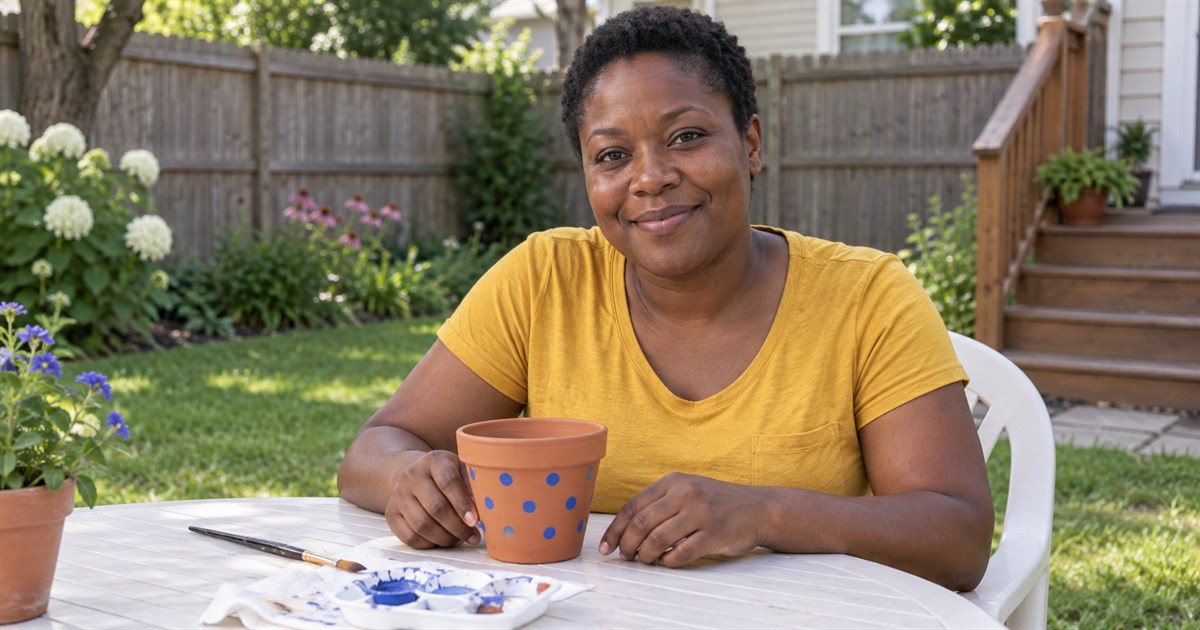
Try something that fits the time and materials you have: decorate an old flowerpot with suitable craft paint, color a shape, read a page about a new interest or look at the plants outside. You do not have to be good at it first.
If movement or time outdoors is comfortable and appropriate for you, choose a familiar, accessible option. A seated activity or looking through a window is also valid. Do not force movement through pain or ignore any activity restrictions you have been given.
The key question is not “Did I become more impressive?” but “Was this a worthwhile way to spend a few minutes for me?” You may decide that a hobby is not your thing. That is useful information, too.
A Five-Line Activity Check
Choose one idea rather than attempting all nine. Before you start, write:
- What I need: Company, a break, a small task, enjoyment or something else.
- What I will try: One specific activity, with an easier alternative.
- My limit: How much time and money I want to spend, including zero.
- What happened: A plain description afterward, including no change.
- My next choice: Repeat, adapt, rest or ask for support.
Fictional example: Tessa feels worn out after a frustrating workday. She chooses ten minutes of painting dots on an old flowerpot, using supplies she already owns. She enjoys choosing the color, but her work problem remains. Her note says, “A pleasant break; still annoyed. Tomorrow I will ask for a clearer deadline.” She does not treat the unfinished problem as a failure to raise her vibration.
This kind of record tracks a choice and a response. It does not diagnose a condition, demonstrate a spiritual frequency or prove that the activity caused every later change in mood.
When Positivity Is Not What You Need
Sometimes the issue calls for a boundary, a practical solution or support rather than another mood activity. If someone repeatedly dismisses your needs, you do not have to become more positive to earn consideration. Our guide to relationship uncertainty and boundaries gives one example of addressing the situation directly.
NHS guidance recommends seeking help for low mood lasting more than two weeks, difficulty coping or self-help that is not working. You can seek support sooner when you need it. If you may harm yourself or are in immediate danger, use local emergency or crisis support.
For readers interested in contemplative practices, our meditation guide also discusses limits. No self-care checklist replaces professional treatment or obliges you to stop care that is helping.
Keep the Fun, Leave the Pressure
You can enjoy spiritual language without turning it into a demand to feel good all the time. Let a song be a song, a craft be a craft and a kind moment be a kind moment. A modest home or ordinary yard is enough space for a small activity, and doing nothing extra is sometimes the right choice.
The aim is not constant positivity. It is a little room to choose what fits you today.
Frequently Asked Questions
What does raising your vibrations mean in this article?
It is a spiritual or everyday metaphor for feeling more engaged, settled or connected. It is not a measurement of a personal energy frequency, a medical diagnosis or a ranking of your worth.
Do positive thoughts guarantee good things will happen?
No. A positive outlook does not control other people, prevent hardship or guarantee an outcome. Difficult events are not evidence that you thought incorrectly or failed to maintain a high vibration.
What is an easy activity that does not cost money?
Try a brief doodle, a favorite song you already have access to, a quiet moment by a window or a kind message to someone who welcomes contact. Choose one option that fits your energy and circumstances.
Do I have to meditate or write a gratitude list?
No. Those are optional activities, not requirements. If gratitude feels forced or inward attention feels uncomfortable, choose a neutral observation, a practical comfort or a different activity.
How can I tell whether an activity helped?
Record what you tried, how long it took and what you noticed afterward. A little enjoyment, no change or deciding the activity is not for you are all valid results. None measures a spiritual frequency.
Is feeling sad a sign of low spiritual energy?
No. Sadness, frustration and grief are not moral or spiritual failures. You do not have to replace every difficult feeling with a positive one to deserve care and support.
When should I seek help rather than another self-care activity?
Seek professional support if low mood lasts more than two weeks, is difficult to cope with or is not improving with the things you try. You can seek help sooner when needed. Use local emergency support if you are in immediate danger or may harm yourself.