

If you want to increase your clairvoyant power, begin by deciding what improvement would mean. Do you want to notice details, describe inner images more clearly, explore a spiritual practice, or test a claim about information you could not ordinarily know? Those are different goals and require different kinds of evidence.
In spiritual language, clairvoyance is often called “clear seeing.” This guide treats it as a belief-based framework for inner impressions, not an established ability that everyone possesses. The seven practices below focus on attention, careful interpretation, and honest checking. They do not promise that hidden facts or future events will become visible.
Three experiences worth recording—not treating as proof
A dream that resembles a later event, a mental image that leads you to a lost item, or thinking of someone shortly before they contact you can feel striking. You can take the experience seriously without deciding immediately that it was paranormal.
- A matching dream: what was written before the event, and which details did not match?
- A found object: did you know the person’s habits or remember placing it nearby?
- An unexpected message: how often do you think of people who do not contact you afterward?
These questions do not dismiss the feeling. They clarify what the experience can support. For a fuller discussion, see Are You a Clairvoyant?
Seven practices for a clearer, more grounded routine
1. Replace pressure with a specific boundary
You do not need to eliminate every doubt or fear to begin. Decide how long you will spend and what you will not do. For example: “I will make one five-minute observation entry. I will not use it to make an accusation, spend money, or predict a crisis.”
Spiritual traditions differ in their views of psychic practices. You may choose a practice that fits your values, adapt it, or opt out. Discomfort is not evidence of a blocked gift, and you do not owe anyone participation. If the exercise makes you increasingly fearful, stop rather than trying to push through.
2. Ask a narrow question
“What is my whole future?” cannot be checked in a useful way. “Which detail did I notice on the object I just studied?” is an observation question. “What does this image bring to mind?” is a reflection question. Neither should be represented as a test of supernatural perception.
If you want to record a predictive impression, state the event and deadline in advance. Avoid questions about someone else’s private thoughts, a diagnosis, or a decision that needs professional advice. Better wording can make a record clearer, but it cannot guarantee that an answer is true.
3. Settle comfortably without forcing sensations
Sit in a comfortable position and keep breathing easy. There is no need for maximum-depth breaths, breath holding, pressure on the forehead, or prolonged concentration on a supposed energy centre. The NHS breathing exercise emphasises gentle breathing within a comfortable range, without forcing it.
Some people use “third eye” as a spiritual symbol for insight. That is not a physical switch you must activate to use this routine. Keeping your eyes open and simply noticing the room is a valid option. Stop any exercise that feels uncomfortable.
4. Describe before you interpret
Write the raw impression as plainly as possible: “a small yellow square,” “a memory of a doorway,” or “no clear image.” Do not immediately turn a shape into an event or a person. The more interpretation you add, the more important it is to label it as your interpretation.
If you are looking at a real object, note its visible details first. If you close your eyes briefly to recall it, identify the activity as memory practice. Comparing your recall with the object can reveal both accurate details and additions, without requiring a psychic explanation.
5. Clarify the language, not the certainty
Instead of demanding a stronger vision, ask whether your description is precise. Does “near water” mean a sink, a river, a blue photograph, or an emotional association? If the original impression does not specify, record that uncertainty rather than choosing a detail afterward.
A sharper image is not automatically a more accurate one. People also differ in imagery vividness. The University of Exeter’s discussion of aphantasia explains that lack of visual imagery does not imply lack of imagination. Words, lists, or ordinary observation can work just as well for this reflective exercise.
6. Consider more than one interpretation
If asking the universe for meaning is part of your personal spirituality, you can treat that as a private reflective question. It does not establish that a reply came from an external source or that its content is correct. Write at least one ordinary alternative alongside the spiritual interpretation.
For a doorway image, alternatives might include a recent conversation about moving, a remembered room, or a wish for change. You do not have to decide which explanation is final. Leaving an image unresolved is more honest than making it fit a desired answer.
7. Check rather than obey
An impression is not a command. Compare it with available evidence and keep the option to disagree. Do not treat doubt as proof that you are denying your power. A practice that cannot tolerate a miss or a question gives you no reliable way to assess it.
Where a claim is checkable, use the rule you wrote beforehand. Where it is symbolic, evaluate whether the reflection was useful without calling that usefulness proof of accuracy. A gentle conversation, an interesting image, and a correct prediction are different outcomes.
A fifteen-minute observation session
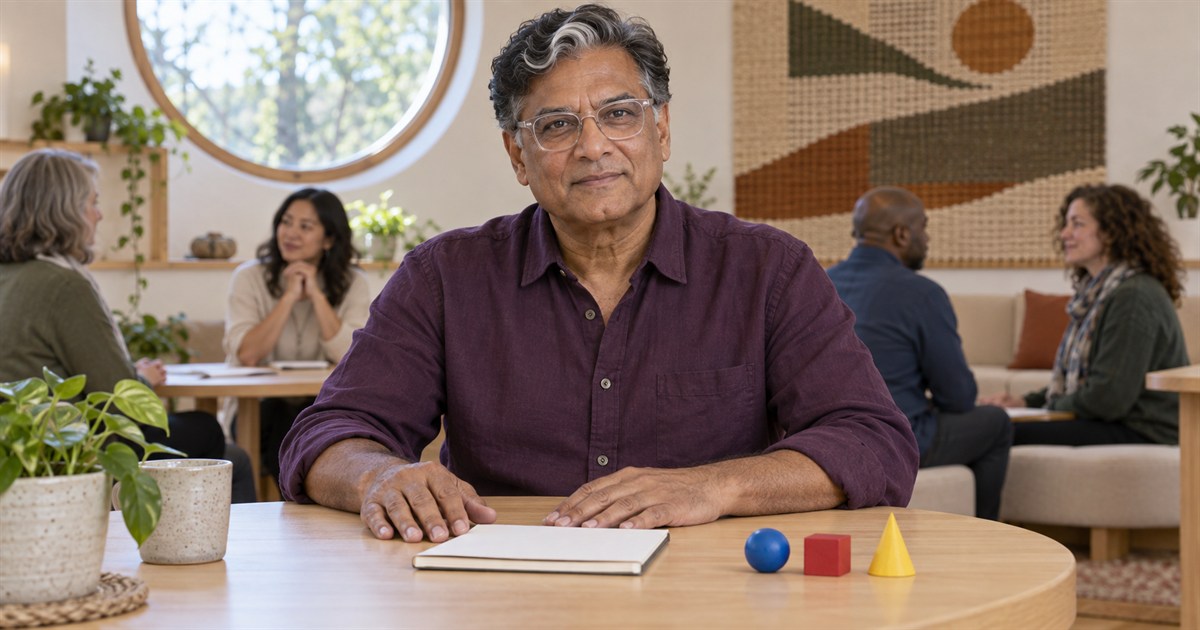
Try this as an ordinary attention-and-recall exercise, not as a clairvoyance test. Use a safe object you own, such as a mug, a notebook, or a wooden shape.
- Two minutes: choose the object and write your aim and stopping time.
- Three minutes: observe it in normal light. Notice colour, shape, marks, and orientation.
- Three minutes: look away and record what you remember. Use words if mental imagery is faint or absent.
- Three minutes: compare the record with the object. Mark correct details, missing details, and additions.
- Four minutes: write one lesson about your observation process and finish.
The aim is a more accurate account of what you noticed—not a dramatic experience. If you prefer a broader selection of exercises, see Activities to Develop Clairvoyance, which distinguishes observation from paranormal claims.
A fictional example: a clearer image that was still wrong
Fictional illustration, not a reported psychic test: Ravi studies a patterned mug, looks away, and recalls a blue stripe near its rim. The image feels unusually clear. When he checks, the stripe is green and lower down the mug.
Ravi records the colour and position as errors. He does not explain them away as an energy change or score the vividness as accuracy. On another attempt, he may choose to spend more time observing the rim and handle. That is an adjustment to an attention exercise, not proof of a strengthening gift.
The useful lesson is that confidence and correctness can differ. A calm routine makes room for that distinction without shame.
A record that includes the inconvenient results
For any separate intuitive or predictive entry, keep these fields:
- Date and exact wording before checking.
- What you already knew or had been told.
- The specific matching rule and deadline, if applicable.
- Your interpretation, clearly separated from the original impression.
- The result, including misses, blank sessions, and unresolved outcomes.
- Ordinary explanations and any changes you made after the event.
A personal log is not a preregistered scientific study. It may make selective remembering easier to notice, but it does not remove every source of bias or establish paranormal ability. Do not publish a percentage as proof without a properly designed test and appropriate analysis.
How to judge whether the practice is helping
Use practical criteria you can observe: Are your notes more precise? Can you record a miss without immediately changing the explanation? Do you stop at the time you chose? Are you respecting other people’s privacy? Can you leave an image unresolved and return to your day?
More intense sensations, more certainty, or spending longer searching for messages are not automatically improvements. If the practice increases fear, disrupts sleep, or starts governing important choices, pause. For health concerns or troubling experiences, seek appropriate professional support instead of assuming a spiritual cause.
You can remain curious without needing to prove an identity. A responsible routine protects your ability to choose, question, and stop.
Frequently Asked Questions
Can practice guarantee stronger clairvoyant powers?
No. The exercises here can support attention, reflection, and a clearer record of impressions, but they do not establish or guarantee paranormal ability. Evaluate those practical outcomes separately from a claim about hidden information.
Are matching dreams or unexpected calls proof?
Not by themselves. Compare an advance record with the event and consider prior clues, chance, broad wording, and all the times no match occurred. A memorable coincidence does not establish its cause.
Do I have to open my third eye?
No. The third eye is a spiritual concept, not a required step in this routine. You can practise observation and reflection with your eyes open, without concentrating on your forehead or trying to produce unusual sensations.
What if no image appears?
Record that no image appeared and move on. You may use words or ordinary observations instead. Do not force imagery, treat a blank session as failure, or invent a message to complete the exercise.
How do I ask a useful question?
Choose a narrow, low-stakes question with a result you can check or a reflective purpose you can state. Avoid questions that claim access to another person’s private thoughts or replace a health, legal, or financial decision.
Should I trust the first message I receive?
Treat it as an impression rather than a command or verified fact. Consider alternatives, compare it with evidence, and keep the option to disagree or stop. Confidence and vividness do not prove accuracy.
How can I tell whether the routine is helping?
Look for practical changes such as more precise notes, honest recording of misses, less pressure to find a message, and respect for time and privacy limits. Increased certainty alone is not evidence of improvement.