

You do not need an expensive interior or a complete redecoration to explore feng shui at home. A small, lived-in space can be welcoming and useful. Start with one place that regularly frustrates you, and choose a change that fits your budget, abilities, and the people who share the home.
Merriam-Webster defines feng shui as a Chinese practice of arranging sites or structures in relation to spiritual forces; the term literally refers to wind and water. The spiritual framework is distinct from practical outcomes such as finding your keys more easily or keeping a walkway clear.
Quick Guide
Choose one small area, agree on the change with anyone affected, and use what you already own. Prioritize safety and access over symbolic rules. Try the arrangement for a few days, then check whether it actually works better. No purchase or guarantee of good luck is needed.
Before You Start: Define “Better” for Your Home
“Better energy” may describe a personal feeling, but it helps to name an observable goal too. Perhaps the front door is hard to approach, the desk feels crowded, or you misplace items you need every morning.
Write one sentence: “I want this area to help me…” Then choose a measure you can review. A clear route to the door, an accessible place for mail, or less glare at the desk gives you a practical way to judge the result.
Do not interpret mess as a moral or spiritual failing. Work, disability, caring responsibilities, limited storage, and shared living arrangements can all affect what is realistic. This is a small home experiment, not a test of worthiness or a promise that objects control your future.
Nine Areas to Consider
1. Make the Entry Useful and Welcoming
In common feng shui descriptions, the entry is associated with incoming qi. You may find that image meaningful, but the practical task is simple: can you enter, leave, and put down essential items without difficulty?
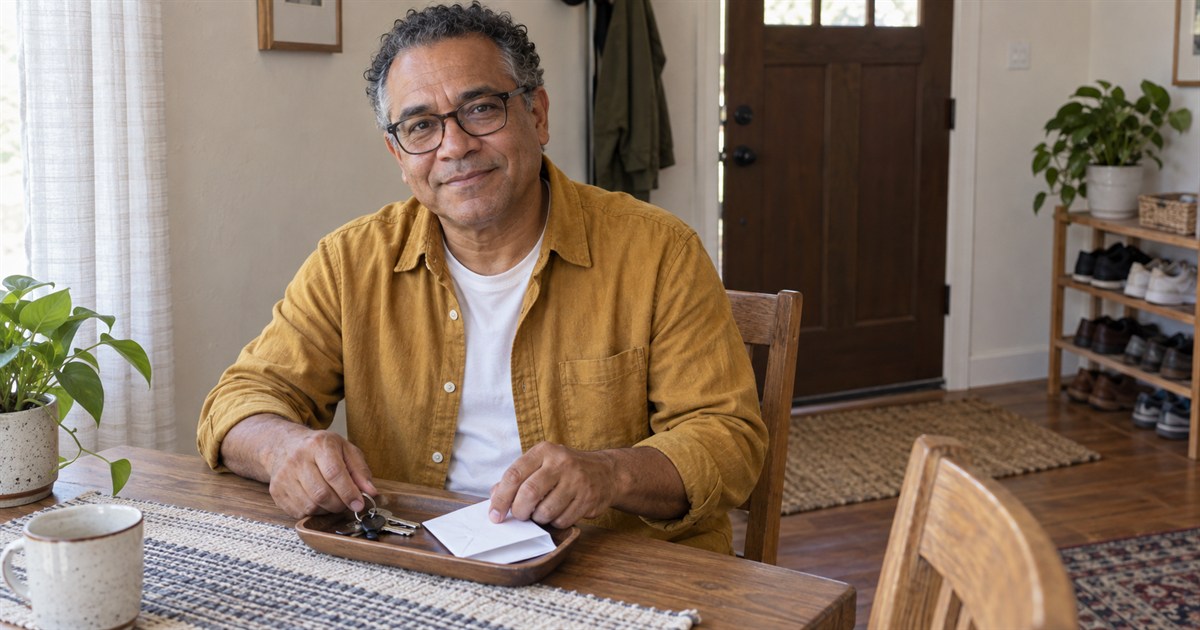
Move your own loose shoes or bags to a suitable place, tidy the mat, and create a small landing spot for keys if it helps. Keep accessibility aids within reach; they are not clutter. Ask before moving another person’s belongings.
The U.S. Fire Administration advises keeping doorways and windows clear for escape. A decorative arrangement should never obstruct an exit. Lighting should help you see the route without introducing trailing cords or glare.
2. Clean Windows Safely
A cleaner pane may improve your view and let available light through. That does not mean a window determines an adult’s insight or a child’s voice. Treat those descriptions as symbolism, not claims about the people in the home.
Clean only areas you can reach safely, using a product appropriate for the surface and its instructions. You do not need essential oils or a homemade mixture. Poison Control advises against mixing household cleaning products, and specifically warns that vinegar and chlorine bleach can release harmful gas.
Keep privacy, temperature, and comfort in mind. More light is not always better if it creates glare or overheating. Adjust a curtain if that is the useful change; a home need not be constantly bright to be welcoming.
3. Check Doors as Doors
Rather than treating a door’s angle as a measure of opportunity, check whether it operates properly and serves the people using it. Remove your own movable obstructions, and report a sticking or damaged door to the appropriate person if you cannot safely address it.
Do not wedge open a fire door, alter locks, or make structural changes for a symbolic rule. In rented or shared housing, follow the relevant maintenance process. A functioning door is a practical benefit, not proof that an unseen flow has been corrected.
4. Adapt the “Commanding Position” Idea
Many popular feng shui guides describe a position where you can see the entrance without sitting directly in its line. You can explore that as a preference at a desk, but it should not override comfort, access, room dimensions, or another person’s needs.
Try a small adjustment only if it is safe and easy to reverse. Does it reduce distraction? Can you get in and out comfortably? If the old position works better, keep it. A bed or desk that cannot fit an idealized diagram does not doom your health or career.
Do not move a stove, gas connection, electrical supply, or plumbing to pursue a symbolic arrangement. Such work requires appropriate expertise and permissions, and is outside this small-scale exercise.
5. Address One Real Obstacle
Walk through your normal route and notice one recurring problem. A box narrowing the hallway calls for an appropriate storage decision. A flickering switch calls for a safety or maintenance assessment, not an interpretation about blocked energy.
Choose the right kind of response. Do not undertake electrical repairs yourself unless appropriately qualified. Avoid moving heavy furniture alone or rearranging an accessible layout without consulting the person who relies on it.
6. Create Space Without Discarding What Matters
Choose one drawer, shelf, or part of a table. Sort only your belongings into items that stay there, items that belong elsewhere, and items you genuinely want to let go. You do not need to clear the whole home.
Keep documents, medicines, safety equipment, sentimental objects, and assistive items according to their real use and importance. Do not throw away someone else’s possessions to “improve the energy.” If an area fills again, review whether the storage arrangement matches daily life rather than blaming yourself.
7. Keep a Space-Clearing Ritual Optional
If you want to mark a fresh start, pause after tidying and state a simple intention, such as “This surface is for the things we need each morning.” That is your own reflection. It does not require a claim that the room contained harmful energy.
Smoke, incense, and fragrance are not necessary. Do not present a generic burning ritual as a universal Indigenous or feng shui ceremony. Respect cultural context, household rules, and everyone’s consent. A quiet, fragrance-free reset is complete in itself.
8. Choose Plants for the Actual Space
A plant may be enjoyable if you like caring for it. Consider light, available space, watering, and the needs of pets or children; check the exact species before bringing it into a shared home. A plant that does not suit your household is not a requirement.
Do not count on houseplants to clean the air. The EPA says a reasonable number of houseplants has not been shown to remove significant amounts of pollutants in homes and offices. Its guidance emphasizes dealing with pollution sources, ventilation, and appropriate air cleaning. Avoid overwatering, and address damp or mold as a maintenance issue rather than covering it with a pleasant scent.
9. End With Appreciation, If You Want To
You can appreciate a useful corner, a familiar object, or the work you completed. You do not need to call that a universal shamanic tradition or believe that every object is alive. Name it as a personal practice if that is what it is.
Gratitude also does not require ignoring problems. A home can shelter you and still need repairs. You may appreciate what works while asking for changes to what does not.
A Ten-Minute Starting Plan
Choose a task small enough to stop comfortably. These steps do not require moving heavy furniture or buying supplies:
- Pick one spot: For example, the surface where you usually leave keys.
- Ask who is affected: Agree with a housemate before changing a shared routine.
- Name the problem: Describe the practical difficulty, not a prediction about bad luck.
- Make one reversible change: Reuse a tray or box, or move an item to an agreed location.
- Check safety and access: Keep routes, doors, and essential items usable.
- Set a review: After three days, ask whether the change helped and what needs adjusting.
A short break is fine if the task takes more effort than expected. Completion of an entire room is not required. For another low-pressure home activity, simple ways to create a more pleasant pause treats “vibration” as personal language, not a promise that you can control outside events.
Worked Example: A Small Entry in a Rented Home
Fictional example: Nico and his housemate share a narrow entry. Keys and mail regularly land on the nearest chair. Nico likes the idea of a welcoming entrance, but neither person wants to buy furniture or change the lease-approved layout.
They agree to reuse a shallow tray on an existing shelf. The walking route remains clear, and the housemate’s mobility aid stays where it is needed. Their goal is that keys are easy to find and mail does not take over the chair.
After three days, the keys are easy to find, but the tray is too small for the mail. They keep the key tray and choose a separate existing folder for papers. The first arrangement partly helped and partly did not; neither result proves a change in luck.
The useful outcome is a routine both people accept. The home still looks lived in, and that is not a problem. They made one ordinary task easier without treating an affordable space as something to be ashamed of.
Your Before-and-After Checklist
- Purpose: What was the area supposed to help you do?
- Consent: Did everyone affected agree to the change?
- Cost: Did you stay within the amount you chose, including choosing zero?
- Safety: Are routes and exits clear, and are important items accessible?
- Outcome: What became easier, stayed the same, or became harder?
- Decision: Will you keep, adjust, or reverse the arrangement?
If an intuitive preference guided your first choice, you can still check the result. Learning About Claircognizance offers a related distinction between a confident impression and a conclusion supported by observation.
A comfortable home is not a fixed photograph. Needs change, belongings move, and routines develop. Let feng shui be a framework you may explore, not a demand for perfection or a guarantee that a layout will solve life’s problems.
Frequently Asked Questions
What is feng shui?
Feng shui is a Chinese tradition concerned with how places and objects are arranged in relation to spiritual forces. This guide distinguishes those beliefs from practical improvements you can observe, such as clearer paths or easier access to everyday items.
Do I need to redecorate the whole home?
No. Start with one small area and reuse what you already own. A tray for keys, a clearer walkway, or a more comfortable desk arrangement can be a complete first step. You do not need a minimalist or expensive interior.
Can furniture placement guarantee wealth or good luck?
This guide does not treat an arrangement as a guarantee of money, health, relationships, or opportunity. Judge a change by its practical effects and your preferences, not by a promise that it controls outside events.
What if my bed or desk cannot face the door?
Work with the room you have. Safe access, comfort, privacy, and the needs of everyone using the space take priority. Do not move heavy furniture, appliances, wiring, or plumbing simply to satisfy a symbolic arrangement.
Do I need smoke, incense, or essential oils to clear a space?
No. An ordinary tidy-up or a brief personal reflection can be enough. Respect others’ consent and sensitivities, and do not treat smoke or fragrance as necessary for a home to be welcoming.
Are plants required for good feng shui?
No. Keep a plant only if it suits the light, care, household, and safety needs of the space. Check the exact species around pets or children. Plants are not a substitute for ventilation, moisture control, or addressing indoor pollution.
How can I tell whether a change helped?
Choose one practical measure before starting, such as whether keys stay easy to find or a path remains clear. Review it after a few days, ask others affected, and keep, adjust, or reverse the change based on what actually happened.